
The Five Sire Lines, and What They Mean When You’re Choosing a Stallion
November 10, 2026


A little while ago I wrote about the Vienna study that read the Y chromosomes of 38 Connemara stallions and geldings, and found four distinct fingerprints across the breed’s five sire lines. I sent one of the five American mane-hair samples in that study, so it felt personal to me in a way most research does not. This article is the follow-up I promised myself: what are those five sire lines, exactly, and what should they mean to you when you are choosing a stallion?
The short answer is: less than you might think, and more than nothing. A sire line is a real piece of a pony’s history. It is not a report card.
What a Sire Line Actually Is
Every male horse carries a Y chromosome that he got from his father, who got it from his father, and so on back down the tail-male line — father to son to grandson, never passing through a mare. The Y chromosome changes very little from one generation to the next. That is what makes it useful for history: it is a fingerprint that survives, nearly unchanged, down a line of stallions.
But notice what that means. A sire line is one single thread in a pedigree: the father’s father’s father’s line, all the way back. It says nothing about the dam’s side at all. A stallion gets half his genes from his dam, and her whole side of the family simply does not show up in his Y chromosome. A sire line tells you history. It does not tell you temperament, talent, or health.
The Five Lines
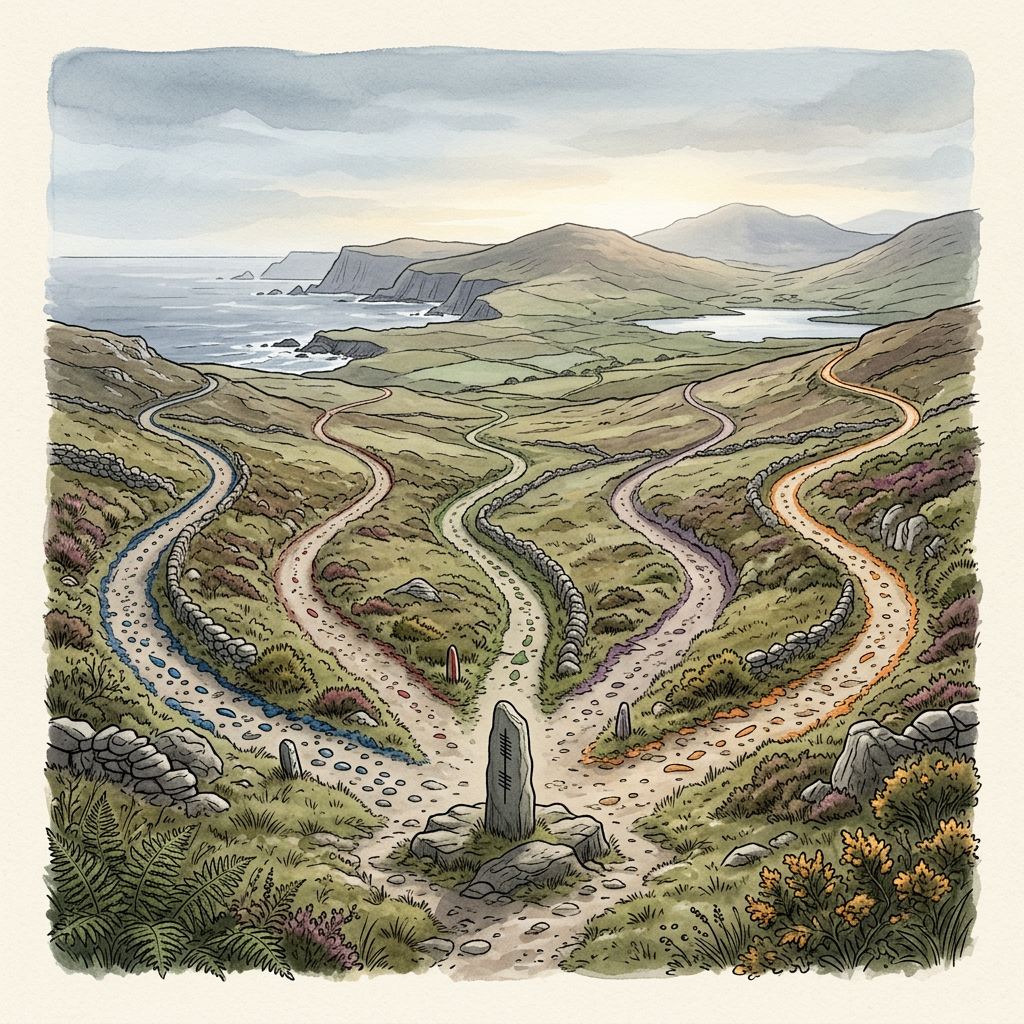
The study covered all five sire lines that are still active in the breed today. There were seven lines originally. Two of them, Black Paddy (born 1916) and John Quirke (born 1923), have no living sires in the tail-male line, so they are gone as sire lines even though their blood may survive through mares. The five that remain are these.
Cannon Ball — the blue line. Born in 1904, a grey, and studbook stallion number one. He was by a Welsh cob, Dynamite, out of a Connemara mare. His most influential son was Rebel. He died in 1926, at 22.
Connemara Boy — the red line. Born in 1922, a grey, and the ninth stallion in the studbook. He was bought by the Connemara Pony Breeders’ Society itself, won his stallion class in 1926, 1930, and 1931, and died of tetanus in 1940. His ancestry, beyond his name, is otherwise unrecorded.
Mountain Lad — the green line. Born in 1928, taken from a half-feral herd. He is described in different sources as grey or chestnut, which tells you something about how thin the early records can be. He died in 1939.
Little Heaven — the purple line. Born in 1942, a small English Thoroughbred, acquired by the Society in 1946. He was bred until 1951 and castrated in 1952 after developing a cataract. His sons included Carna Dun, born 1948, and Texas Hope.
Naseel — the orange line. Born in 1936, an Arabian, white-grey in colour. He was never registered by the Society himself, but his son Clonkeehan Auratum, born 1954, was bought in 1954, registered in 1958, and left 16 registered sons.
The Four Fingerprints
The Vienna researchers found four Y-chromosome fingerprints, called haplotypes, among the 38 ponies. Two of them had never been found in Connemaras before. Here they are, in plain language.
The most common fingerprint in the sample, found in 14 of the 38 ponies, was the main one in the Mountain Lad line (all four Mountain Lad samples) and the Cannon Ball line (10 of 13). It is a fingerprint shared with British and Irish native ponies — Dales, Dartmoor, Fell, Highland, and Kerry Bog ponies — and it points to old Spanish influence in these island breeds.
The second, found in 10 of 38, was the main one in the Connemara Boy line (7 of 8). It is also found in Turkoman horses, some Arabians, and the Byerley Turk line of Thoroughbreds — interesting precisely because Connemara Boy’s own ancestry is unrecorded, so his Y chromosome is the one surviving clue about where he came from.
The third, found in 9 of 38, was new for Connemaras. It was the main fingerprint in the Little Heaven line (8 of 9), and it is a Thoroughbred marker traced back to Whalebone, born in 1807 — exactly what you would expect from a Thoroughbred founder, and a nice confirmation that the paper pedigree and the DNA agree.
The fourth, found in 5 of 38, was also new for Connemaras. All four Naseel-line samples carried it, and it is an Arabian marker matching Ibrahim, born in 1899, a paternal ancestor of Naseel. Again, the DNA agrees with the paper.
Those counts are sample frequencies only — they describe 38 ponies, not the whole breed, and nobody should quote them as breed-wide proportions. Ireland was the only country in the study with all four fingerprints in its sample, which is what you would expect from the home country.
Three Paper-Trail Puzzles
The study also turned up three places where the DNA and the paper pedigrees do not quite agree. The researchers present these as possibilities, not proof, and I am going to do the same. First, the Cannon Ball line splits in two: one branch carries the common native-pony fingerprint, the other carries the Connemara Boy fingerprint — possibly a mix-up in 1935, when colts of both lines were raised together. Second, one branch of the Connemara Boy line, the Murrisk branch in Australia, carries the Thoroughbred fingerprint instead, suggesting an unrecorded Little Heaven-line sire. Third, one branch of the Little Heaven line, through Camlin Cicada and Carna Dun, carries the Arabian fingerprint instead, with a circumstantial case pointing to Clonkeehan Auratum as the actual sire. Suggestive, not proof — in all three cases.
I love these puzzles, because they show what this kind of research is actually for: checking the record, and reminding us that the record was kept by people, in a rocky part of the west of Ireland, a hundred years ago. Three stallions listed as Mountain Lad’s sons were foaled after his recorded death in 1939, which tells you everything you need to know about the state of some of those early records.
What a Sire Line Cannot Tell You
Here is the list that matters most, and I want it plain.
A sire line cannot tell you anything about temperament. Temperament comes from the whole pedigree and the whole life of the horse — dam lines, handling, management — and the Y chromosome carries almost nothing to do with it.
A sire line cannot tell you anything about talent or ability. It cannot tell you whether a stallion’s foals will jump, move, or stay sound. Only the stallion’s own record, and his offspring’s records, can tell you that, and even then you are looking at a young sire’s early record, not a guarantee.
A sire line cannot tell you anything about HWSD. Hoof wall separation disease is carried on an entirely different piece of DNA, it is tested separately, and a stallion’s sire line tells you nothing about his HWSD status. My stallion R Blue Moon is an HWSD carrier, N/H, and that is a test result, not a pedigree guess. He is bred only to tested non-carrier mares. No sire line changes that rule. And it is a separate question from SCC and the DDB2 variant, a different gene and a different risk, which Blue has tested clear for.
A sire line cannot tell you anything about the mares. A stallion’s daughters do not inherit his Y chromosome at all. If you are choosing a mare, her sire line is irrelevant to her in exactly the same way — what matters is her own pedigree, her own record, and her own temperament.
So What Does It Mean When You’re Choosing a Stallion?
It means this: use the sire line the way you would use any other piece of breed history. It is context. It tells you which founder family a stallion belongs to in the tail-male line. It can warn you when a pedigree might have an error in it. It can help you understand why a stallion looks and moves the way he does, in the broadest sense, if his line is known for a certain stamp.
But choose the stallion himself. Go and see him, or at least see honest video of him. Watch how he behaves with people and with other horses. Look at his conformation and his movement with your own eyes. Ask for his health testing — HWSD status, at minimum, in this breed. Look at what his foals are doing, if he has foals old enough, and be honest with yourself about how much evidence there really is. A young sire with a handful of youngstock has an early record, not a proven one, and I say that as the owner of a young sire.
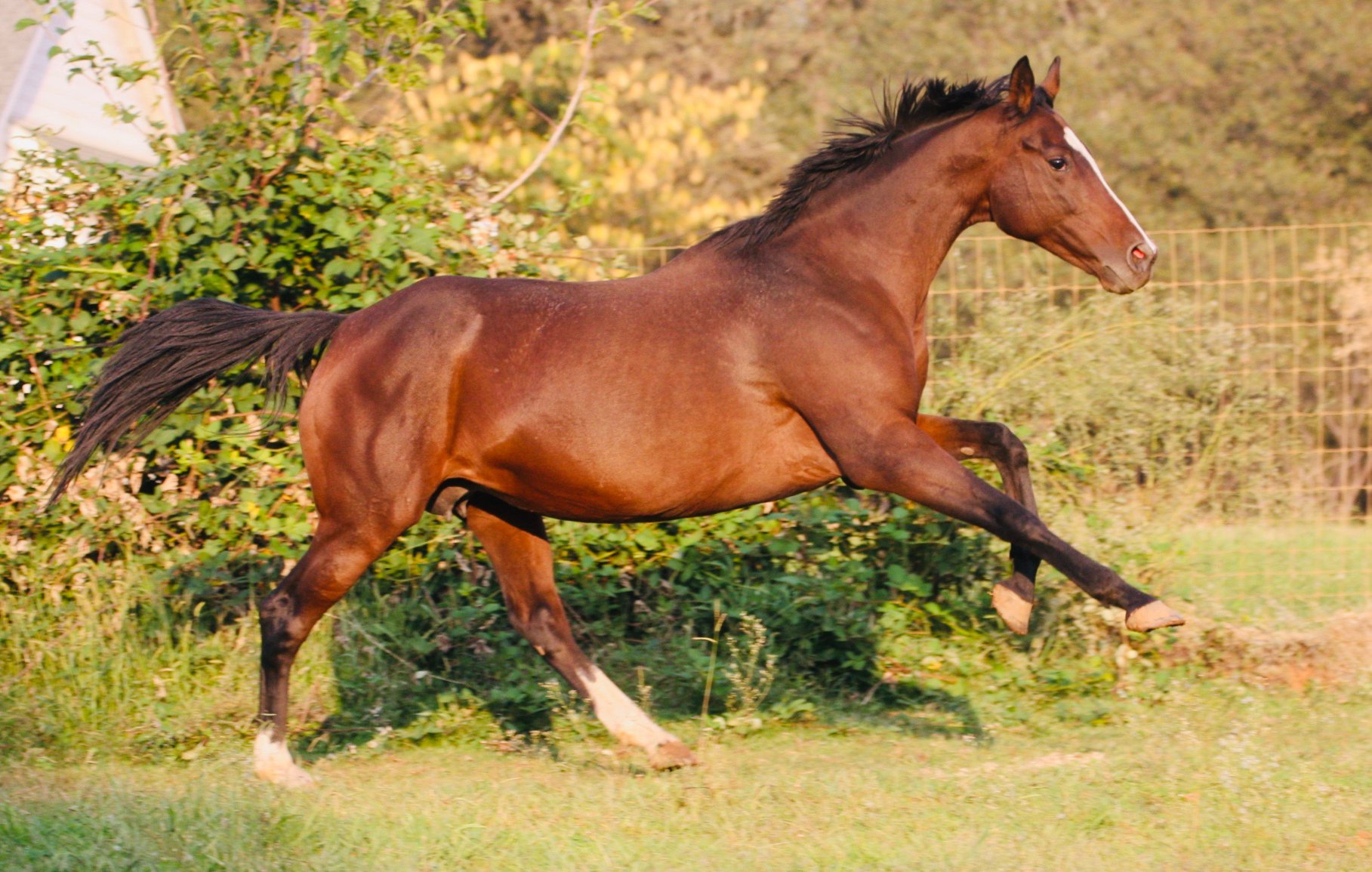
One more thing, for honesty. Blue’s own Y-chromosome fingerprint has not been published. He was not one of the 38 ponies in the Vienna study. His sire line runs through his sire, Wildwych Eclipse, and his grandsire, Glenormiston Flurry Knox, who was by Abbeyleix Finbar. Finbar was by Ballydonagh Rob, who was by Carna Bobby. Beyond Carna Bobby I will not guess. If his fingerprint is ever published, I will tell you what it is. Until then, anybody who assigns him to one of the four fingerprints is guessing, and I would rather say “we don’t know” than dress a guess up as a fact.
The Connemara’s five sire lines are a wonderful piece of history. They connect a pony standing in a California paddock to a half-feral herd in 1928, to a Thoroughbred with a cataract, to an Arabian who was never registered, and to a grey stallion who was studbook number one. That is worth knowing. It is just not the question that matters when you are choosing a stallion, which is always the same: is this the right stallion for this mare, and is he the kind of horse I want to put my name behind? That question is answered in the barn, not in the laboratory.

Sources: Jetzinger, S. A., “Y-chromosomal lineages as a window into the breeding history of the current Connemara pony population,” diploma thesis, University of Veterinary Medicine Vienna, October 2026 (file supplied by Lisa; figures and founder details in this article are from the thesis). The tail-male chain from Flurry Knox through Abbeyleix Finbar, Ballydonagh Rob, and Carna Bobby was checked Nov 3, 2026, against the Wildwych Flurry Knox page (https://wildwych.tripod.com/Flurry.htm) and AllBreedPedigree entries for Abbeyleix Finbar and Ballydonagh Rob. No other web sources were checked for this article.






For more of our latest photos and inspiration, follow along on instagram at @instapony_.
© Redbud Ranch 2020 | Connemara Sport Horses and Ponies | photos by Lisa Martin |
terms & Condtions |
privacy Policy
Intentionally Bred with People in Mind
Browns Valley, CA
+ Show / Hide Comments
Share to: