


Begin with purpose
Before choosing a stallion, define the intended offspring: a purebred breeding prospect, a family pony, or a performance partner. The mare should be evaluated against that goal, not simply against a show-ring ideal. A mare who would make a wonderful amateur’s event pony may not be the right foundation for a breeding program, and a mare who never sees a show ring may produce exactly the sensible, rideable foals the market actually wants.
Write it down. Her strengths, her weaknesses, her temperament, her performance or work history, and what is actually known about her relatives and offspring. Memory flatters; paper doesn’t. Breeding decisions made from a written evaluation are consistently better than decisions made from affection — and every breeder has affection. That is not a flaw. It just has to be managed like any other variable.
Assess the individual
Evaluate the mare on level ground and in motion: balance, feet, limb alignment, back and loin, movement, body condition, and temperament. Watch her walk and trot away from you, toward you, and past you. Handle her. Note how she stands, how she loads, how she settles.
Distinguish structural characteristics from temporary changes. A mare who is under-conditioned, recently foaled, overdue for the farrier, or carrying a winter coat is not showing you her structure — she is showing you her circumstances. Age changes a topline. Pregnancy changes almost everything. Evaluate what will still be true in five years, and be honest about what might not be heritable at all. A mare can be a wonderful riding pony without necessarily being the best breeding candidate, and the reverse is equally true.
A practical order of work:
- Feet and limbs first. Feet are the foundation everything else stands on, and limb alignment affects soundness for life — hers and her foal’s.
- Body and balance. Proportion, back and loin, depth and spring of rib, and how the parts fit together as a whole.
- Movement. A free, regular walk with overtrack, and a trot that is straight and unhurried. You are looking for how she is built to move, not how she performs on a good day.
- Temperament. How she handles the ordinary: grooming, hoof care, loading, new places. Temperament is heritable, and it is the trait her foals’ owners will live with every single day.
With a Connemara, add breed eyes
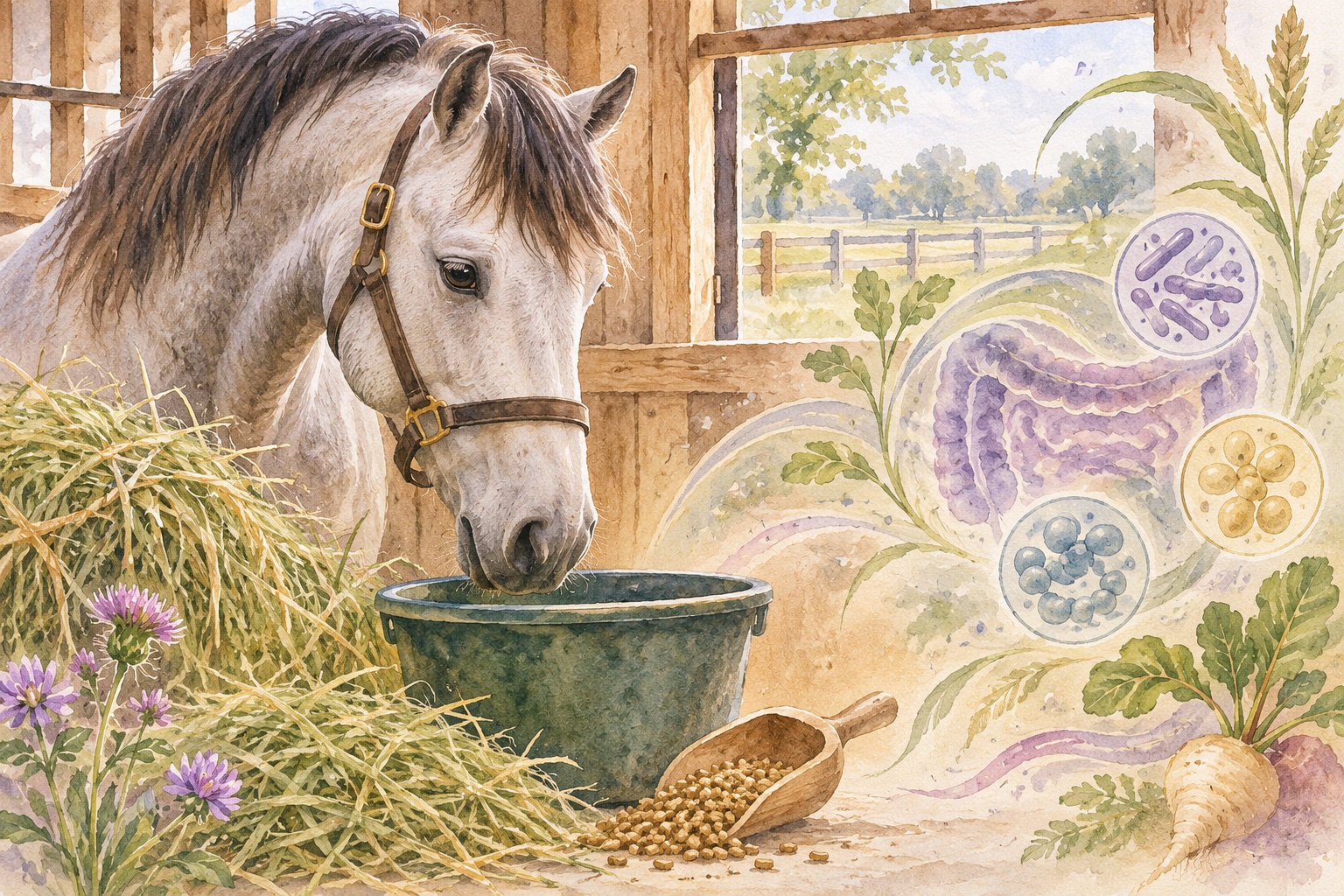
Some of the general points above land differently in this breed. Connemaras are easy keepers shaped by sparse Irish grazing, and a native mare can look in good flesh on very little — which means condition scoring needs honest hands, not just eyes. Check the crest and fat pads, and keep metabolic health in mind: the same thriftiness that makes the breed hardy makes it efficient at turning rich feed and lush pasture into a problem.
Feet and bone are breed strengths — good, flat bone and hard feet are part of what a Connemara is — but “the breed has good feet” is not an evaluation of this mare’s feet. Assess the individual in front of you. And remember the breed matures late: a four-year-old Connemara mare is still developing, and her evaluation should be read as a progress report, not a final verdict.
Reproductive and medical review
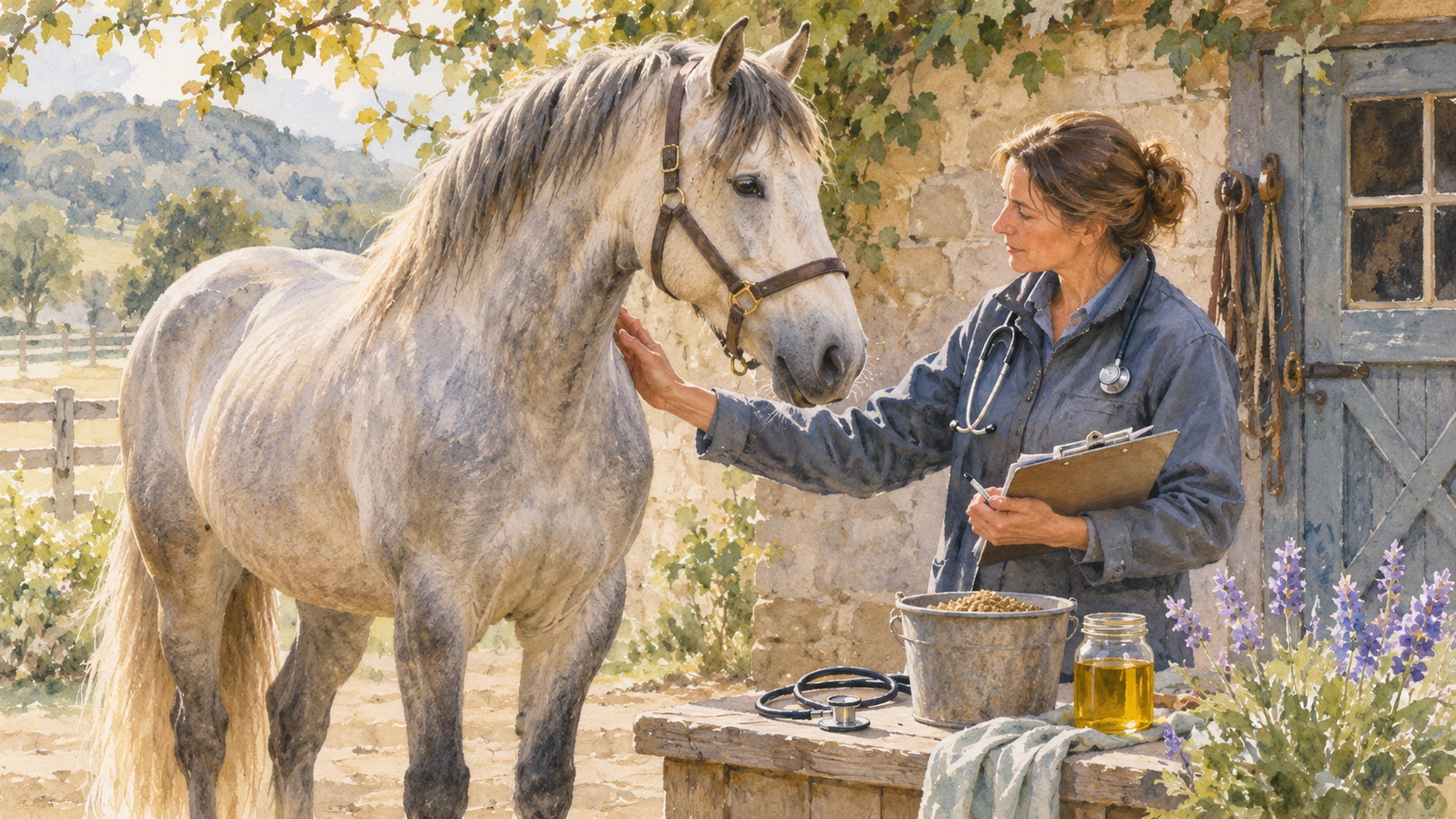
Arrange a veterinary breeding soundness consultation appropriate to her age and history. Discuss previous pregnancies, foaling complications, cycles, uterine health, vaccinations, parasite control, dental care, and any chronic pain or metabolic concerns. A maiden mare, a mare who has foaled uneventfully five times, and a mare who lost a season to infection are three different conversations — bring the history, in writing, to the appointment.
An examination can identify risks. It cannot guarantee pregnancy or a healthy foal, and any honest veterinarian will tell you so. What it can do is stop you spending a season — and a stud fee — on a problem that was findable in advance.
Pedigree and genetics
Verify registration, parentage, and any required health-test results with the relevant registry. Hoof Wall Separation Disease (HWSD) status is especially relevant to Connemara mating decisions: it is a simple DNA test, and the rule is equally simple — know the status of both parents before you breed, and never mate two carriers together. A carrier mare is a healthy mare; she simply needs a clear (N/N) stallion. Managed that way, HWSD is a piece of paperwork, not a crisis.
Assess the wider female family where reliable records exist. The dam line is half the pedigree and frequently more than half the story — what did the mare’s dam produce, and her grand-dam? At the same time, remember that famous relatives do not guarantee an individual outcome. Pedigree is evidence, not destiny.
A responsible decision
Consider the mare’s welfare, the availability of appropriate foaling facilities, emergency veterinary care, a realistic plan for the foal, and the full cost of the season — including the cost of an unsuccessful one. Stud fee, collections, shipping, veterinary work, and a year of keeping a mare who did not catch all belong in the honest arithmetic.
Sometimes the best choice is to postpone breeding, pursue a different mating, or not breed at all. Evaluating the broodmare properly means being willing to hear any of those answers — including, occasionally, about a mare you love.
References and further reading
American Connemara Pony Society · ACPS inspection criteria · UC Davis Veterinary Genetics Laboratory · American Association of Equine Practitioners · British Connemara Pony Society
Educational information only; not a substitute for veterinary advice, official registry rules, or individual professional assessment. Confirm current requirements and recommendations before breeding.

Previous Post
Next Post





For more of our latest photos and inspiration, follow along on instagram at @instapony_.
© Redbud Ranch 2020 | Connemara Sport Horses and Ponies | photos by Lisa Martin |
terms & Condtions |
privacy Policy
Intentionally Bred with People in Mind
Browns Valley, CA
+ Show / Hide Comments
Share to: