


Start With Temperament and Handling
The breed standard describes the Connemara temperament as mannerly and manageable, kind, responsive, possessing good sense and basic intelligence. The American Connemara Pony Society calls a gentle disposition the breed’s most outstanding characteristic. That is the standard, and it is a good one, but no breed standard guarantees the individual horse standing in front of you. You have to meet that horse.
Watch the horse on the ground before you watch it ridden. How is it caught? How does it lead? Does it stand quietly to be groomed, to have its feet picked up, to be tacked up? What does it do when something unexpected happens — a dog runs past, a gate bangs, a plastic bag blows across the yard? You are looking for a horse that notices, thinks, and settles. A horse that panics at small things on the ground will panic at bigger things under saddle.
Ask to see the horse caught in the field, not just led out of a stable already tacked up, and ask what it is like for the farrier and the vet, for clipping, for loading, and for being left alone. The answers matter more than a pretty trot-up, because you will live with the handling every day.
If you are an amateur buyer, be honest about your experience. A sharp, talented horse that needs a confident rider is not a bargain if it frightens you. A quieter horse you enjoy handling is worth more than a flashier one you are afraid of.
Conformation and Movement: The Basics
You do not need to be a conformation judge to buy a good Connemara. You need to know the basics and to know when to ask for help.
The Connemara is the largest of the pony breeds, 13 to 15 hands, with 14 to 14.2 hands the average, and it stands on short legs covering a lot of ground. The standard calls for a short, dense, flat, clean cannon bone, measuring 7 to 9 inches below the knee. Look for good bone, a deep chest, a strong back, and straight, correct legs. The feet matter a great deal in this breed — look at them carefully, and ask when the horse was last shod or trimmed, and by whom.
Watch the horse move on a hard, level surface, in a straight line, toward you and away from you, and then on a circle on both reins. You are looking for sound, even, straight movement, with no lameness or stiffness. If you are not sure what you are seeing, bring someone who is — an instructor, a knowledgeable friend, or your vet at the vetting.
Vetting: Get the Vet Involved Before the Money Moves
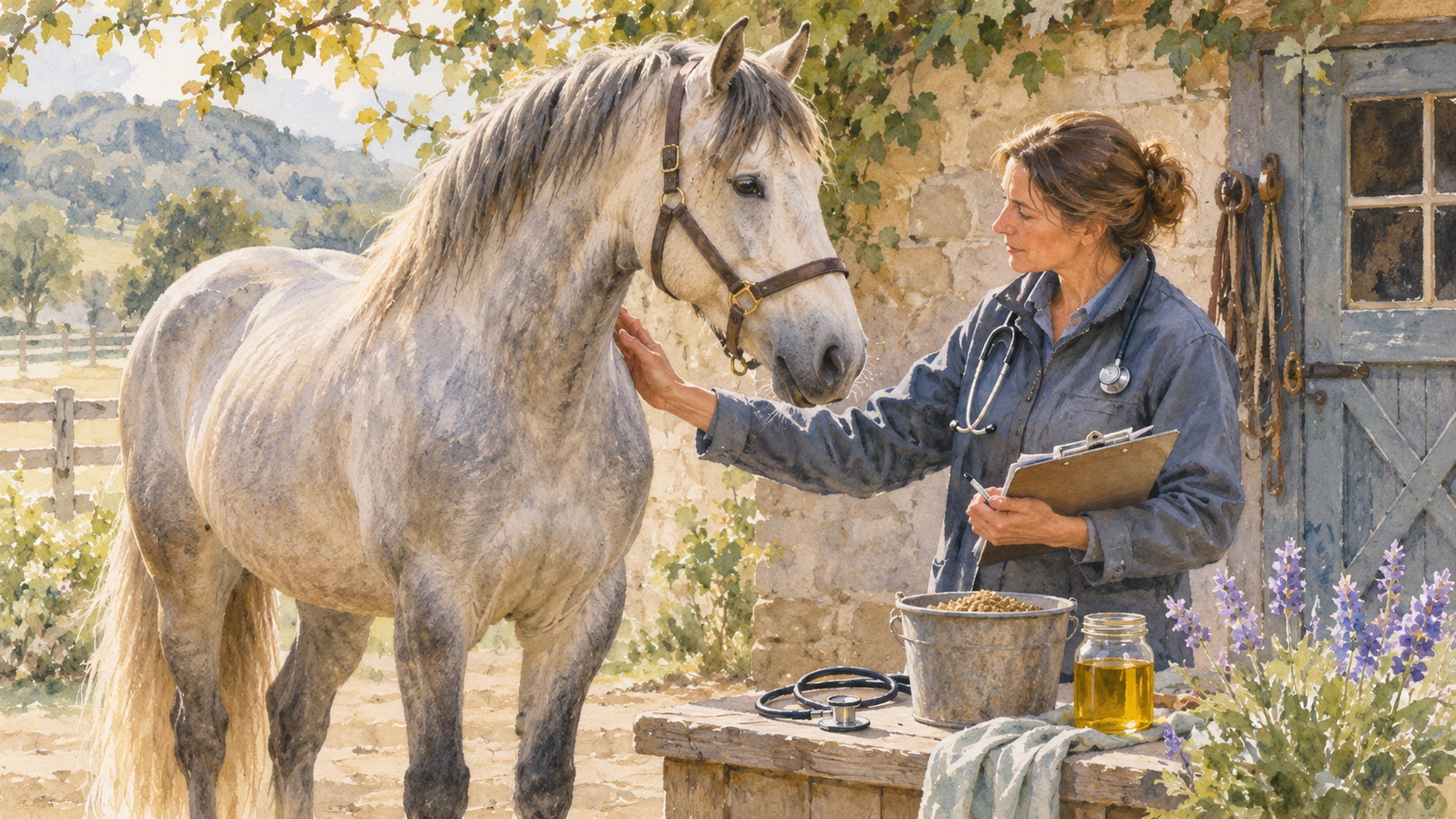
A pre-purchase examination is not an optional extra. It is part of the purchase. For a first Connemara, I would always recommend a full vetting by your own vet, not the seller’s vet. Tell the vet what you intend to do with the horse, honestly, so the vetting matches the job. Ask the vet to talk you through anything found in plain language, and what each finding means for the work you have in mind. Vetting is not a pass/fail exam. It is information, and you decide what to do with it.
I am not a vet, and this article is not veterinary advice. Your vet is the authority on the horse in front of you. If anything in this article and your vet disagree, listen to your vet.
Papers and Pedigree: Check Them
Ask to see the registration papers before you agree to buy, and check that they match the horse: name, markings, microchip number, age, and pedigree. Read the pedigree honestly: it tells you who the parents are, not whether this horse will jump or has a good temperament. Those things come from the horse in front of you.
Red Flags: When to Walk Away
Walk away, politely and without guilt, if:
- The seller will not let you handle the horse, ride it, or have it vetted by your vet.
- The horse is lame, stiff, or uncomfortable, and the seller says it will “work out of it” without a vet having looked.
- The horse’s age, identity, or papers do not match what you were told.
- You are rushed, or told another buyer is about to take it, and you are not given time to think or to get advice.
- The horse frightens you on the ground, and the seller tells you that you will “get used to it.”
- The price changes during the conversation, or extras appear that were not mentioned at the start.
None of these make the seller a bad person. All of them make the purchase a bad idea. There are other horses. Take your time, and buy the right one.
Questions to Ask the Seller or Breeder
Take this list with you. A good seller will welcome these questions. A seller who resents them is telling you something too.
- What is the horse’s temperament like on the ground, for the farrier and vet, and in new places?
- What work is the horse doing now, and how often?
- Has the horse had any injury, illness, or surgery? May I see the records?
- Why is the horse for sale?
- What is the horse fed, and what is its routine?
- Is the horse good to load, clip, and travel alone?
- What is included in the price?
- May I have the horse vetted by my own vet, and may I try it more than once?
One thing to understand before you hand over money: there is no trial period and no return with a horse, the way there is with goods from a shop. A private sale is final once it is made, unless the seller has agreed something different in writing, and most sellers have not. That is why the vetting, the second visit, and the questions above all happen before the money moves, not after. I do not agree to trial periods or returns on my own horses, and I say so plainly here so nobody is surprised. If a trial or a return matters to you, ask before you buy, and do not buy on a promise that is not written down.
The Horse You Take Home
The right first Connemara is the one you can handle on a bad day, ride on a good day, and afford to keep month after month. It is the one whose temperament you trust, whose health status you know, whose papers match the horse, and whose vetting you understand. It does not have to be the flashiest horse you saw. It has to be the one you will still be glad you bought in five years’ time.
Sources: American Connemara Pony Society, “About Connemaras,” https://acps.org/about-connemaras/8/ (height, temperament, cannon bone).

Previous Post
Next Post





For more of our latest photos and inspiration, follow along on instagram at @instapony_.
© Redbud Ranch 2020 | Connemara Sport Horses and Ponies | photos by Lisa Martin |
terms & Condtions |
privacy Policy
Intentionally Bred with People in Mind
Browns Valley, CA
+ Show / Hide Comments
Share to: