


Evaluating the back, loin, withers, and coupling as a connected whole
Why the topline matters
A Connemara’s topline is more than the silhouette between withers and tail. It includes the relationship of neck, withers, back, loin, pelvis, and the supporting musculature. These structures influence how a horse carries itself and responds to training, but no single line or angle can predict performance. Evaluate the whole animal in a natural stance and in motion, not only in a posed side-view photograph.
Start with proportion
The American Connemara Pony Society describes a strong, muscular back and acknowledges that some length of back is normal, especially in mares. The British standard similarly allows some length when the body is well ribbed up and the loins are strong. Therefore, “shorter is always better” is not an accurate rule. More important is how the length fits the animal’s depth, rib cage, pelvis, and overall balance.
Withers and the neck-to-back transition
Well-defined withers and a neck that meets the shoulder smoothly contribute to a useful riding-horse outline. Consider whether the neck is set too low or appears disconnected from the shoulder. A horse with an attractive neck can still lack balance elsewhere. Fat deposits, posture, conditioning, and camera angle can obscure the underlying structure, so examine the animal from several views.
Back and loin: distinguish structure from condition
The back spans a region supported by vertebrae, ligaments, and muscles; the loin bridges the last rib and pelvis. Breeders often describe a strong or well-coupled loin, but visual impressions are not a substitute for a veterinary or functional assessment. Muscle development changes with age, work, saddle fit, pain, and nutrition. A temporarily weak-looking topline in a young or unfit pony may not represent permanent conformation.
Croup and hindquarter connection
The slope and length of the pelvis, hindquarter muscling, and hindlimb alignment all contribute to the overall picture. Do not isolate a fashionable croup shape from the horse’s ability to step underneath itself, maintain rhythm, and carry weight comfortably. Observe walking and trotting in hand and, where age and training permit, under saddle.
Evaluate with discipline
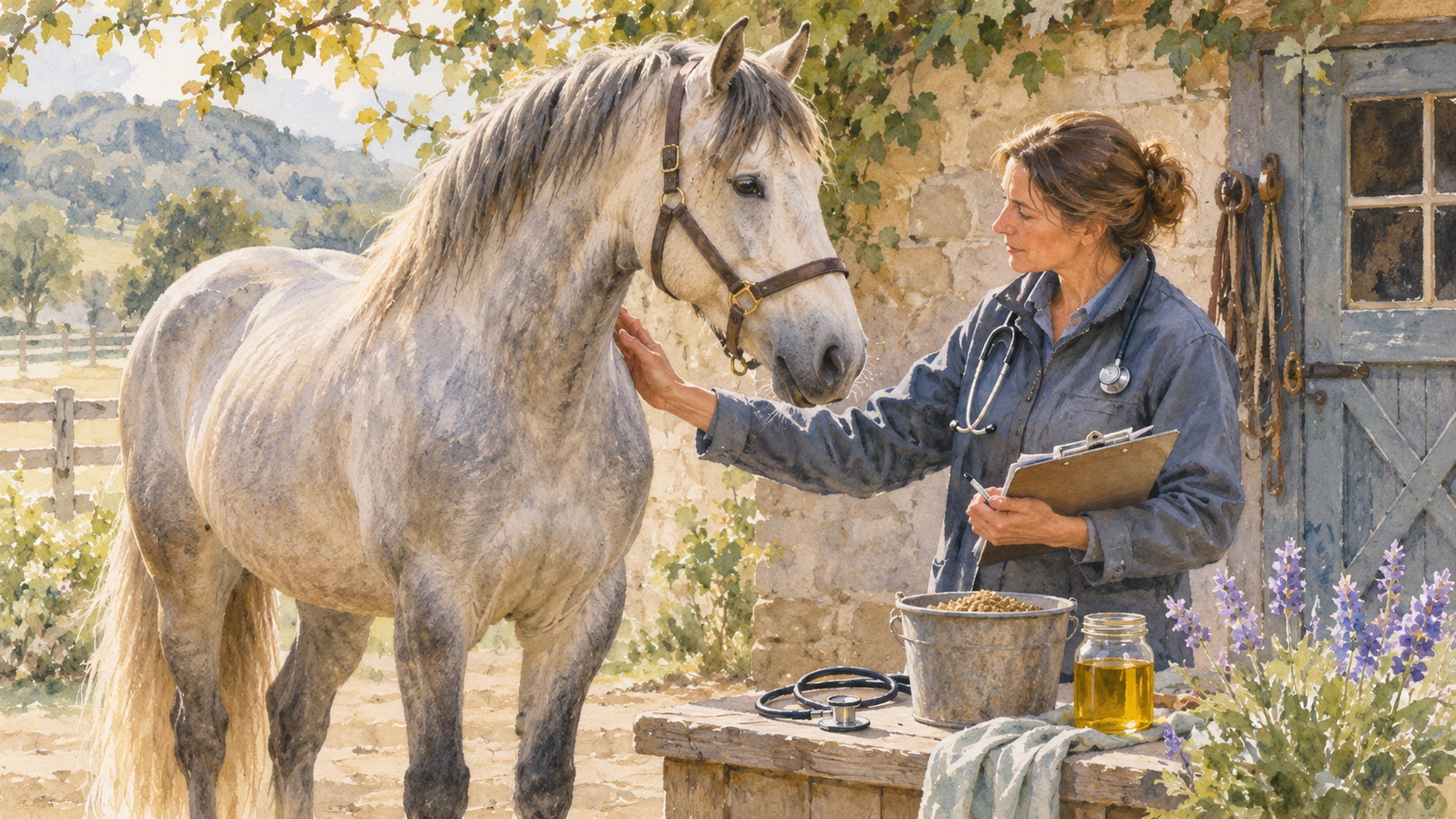
Stand the horse square on level ground. View it from both sides and behind. Observe whether the topline remains harmonious when the head is carried naturally, and whether movement is straight and regular. Note concerns without turning them into diagnoses. If a back appears painful, asymmetrical, or persistently weak, seek veterinary advice rather than assuming the cause is inherited conformation.
Related reading: Understanding Breed Type · Understanding Balance and Proportion
References and further reading
- ACPS breed standard: https://acps.org/about-connemaras/
- ACPS inspection criteria: https://acps.org/inspections-criteria/
- British Connemara Pony Society breed standard: https://www.britishconnemaras.co.uk/about-the-breed/
Editorial note: Educational guidance only. Individual health, lameness, and breeding questions should be discussed with a qualified veterinarian and the relevant breed registry.
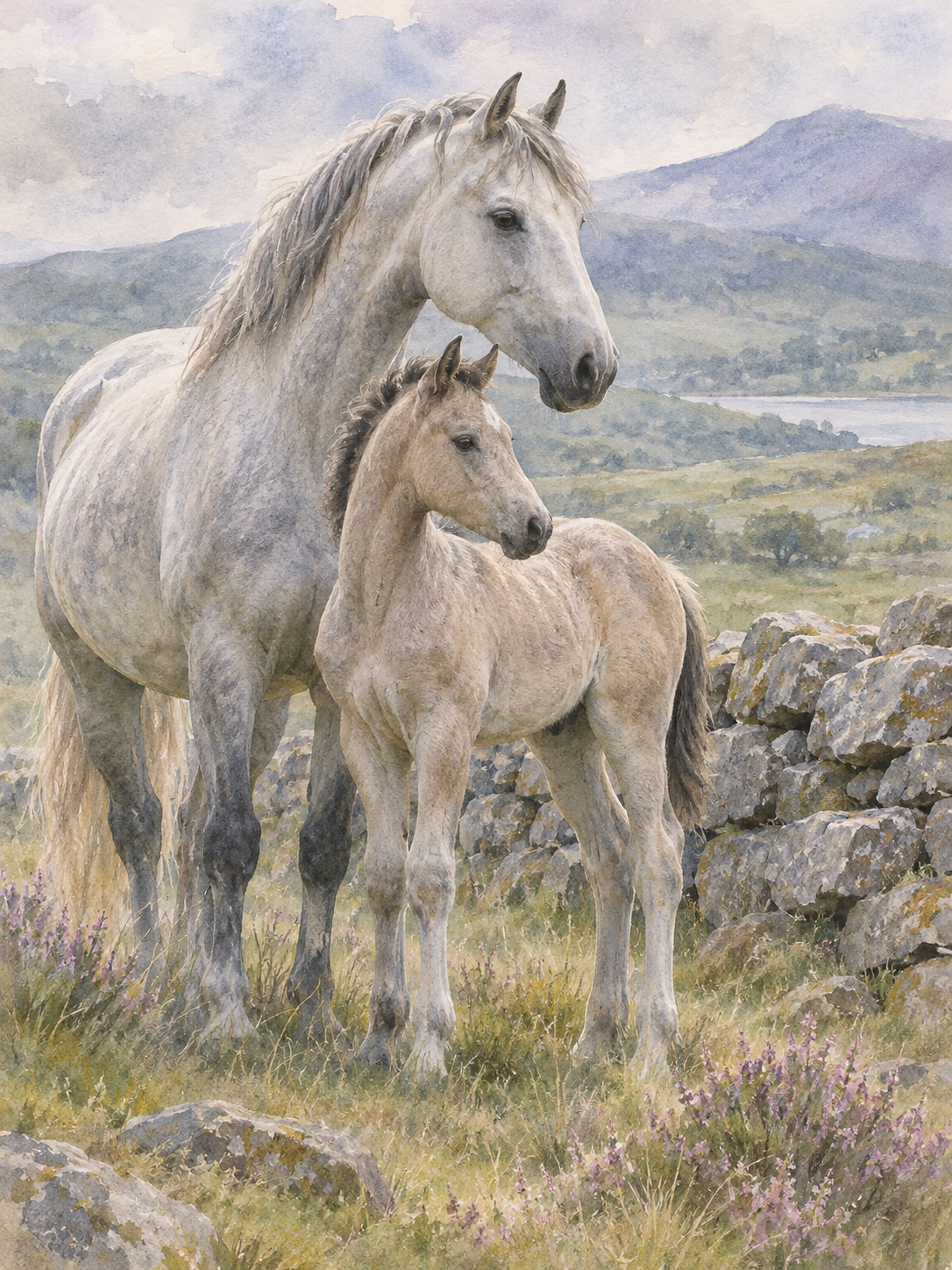
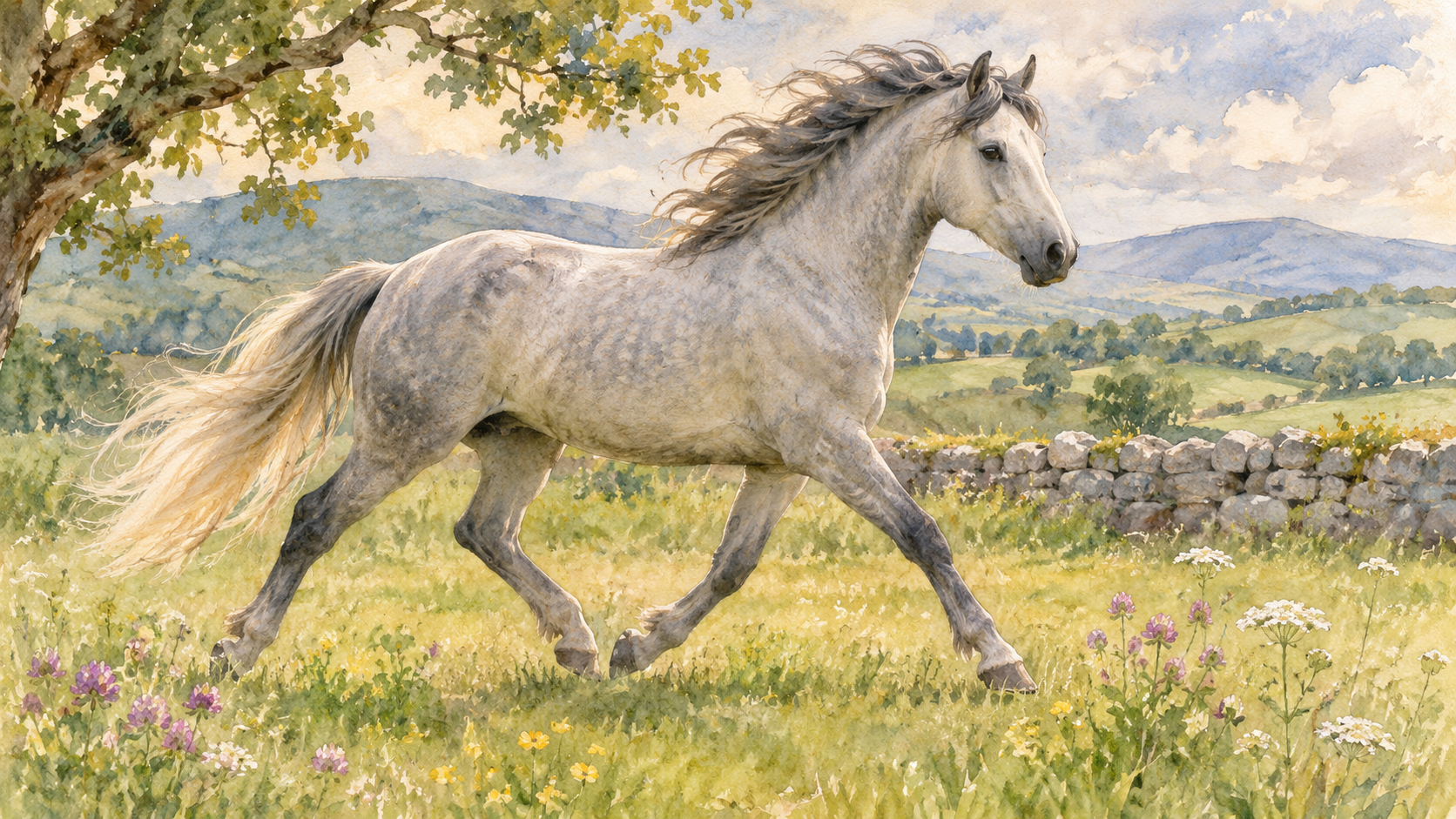
Illustrations are artistic interpretations, not diagnostic or anatomical diagrams. They show the general impression of the subject, not a specific horse or a measurement guide.






For more of our latest photos and inspiration, follow along on instagram at @instapony_.
© Redbud Ranch 2020 | Connemara Sport Horses and Ponies | photos by Lisa Martin |
terms & Condtions |
privacy Policy
Intentionally Bred with People in Mind
Browns Valley, CA
+ Show / Hide Comments
Share to: