


Why outstanding parents do not always produce outstanding offspring
The promise and uncertainty of breeding
Breeding begins with a deliberate choice of parents, but it does not end with a predictable copy of either one. A foal receives a combination of genetic variants from its sire and dam, and that combination is unique. A beautifully balanced mare bred to a successful stallion may produce an excellent foal; it may also produce one that falls short of the breeder’s hopes. This uncertainty is not evidence that pedigree research is useless. It is the reason careful breeders study families, repeated outcomes, and the individual horse rather than relying on a single photograph or achievement.
What heritability actually means
Heritability is a population-level statistical measure: within a defined population and environment, it describes the proportion of observed variation in a trait associated with genetic differences. It is not the percentage of an individual horse’s trait that is genetic, and it does not tell us the chance that one foal will inherit a particular feature. Estimates can differ by population, trait definition, and management. A high estimate also does not mean that management is unimportant.
Simple and complex inheritance
Some traits are strongly influenced by a single identifiable genetic variant. Hoof Wall Separation Disease (HWSD), for example, is associated with a specific recessive variant in SERPINB11, making DNA testing useful for mating decisions. Most traits that breeders value — athletic ability, overall conformation, temperament, movement, and longevity — are complex. Many genes, developmental factors, training, nutrition, and management can influence their expression. A DNA result for one condition should never be mistaken for a general certificate of quality.
Look for patterns across offspring
A stallion’s own performance establishes what he has done; his offspring begin to show what he may consistently transmit. Compare progeny from several mares, ideally at similar ages and under comparable management. Ask whether the same strengths and weaknesses appear repeatedly. A mare’s production record is equally valuable, but a small number of foals provides only limited evidence. Avoid attributing every outcome to the sire or overlooking the mare’s contribution.
Select for the whole horse
The temptation to chase one striking trait is powerful: a spectacular trot, a famous pedigree, a beautiful head, or an impressive jump. Yet breeding decisions should consider structural balance, character, genetic health, family history, and the intended job together. Selection for one feature without attention to the rest can introduce trade-offs. Breeding is a long-term process of improving probabilities, not eliminating uncertainty.
A practical breeder’s exercise
Before choosing a mating, write down three qualities the mare reliably demonstrates, three qualities you would like to improve, and any health or pedigree concerns. Review the proposed stallion’s mature offspring rather than relying only on his promotional material. After the foal matures, revisit the predictions and record what actually developed. Over time, honest records are more useful than selective memories.
Related reading: Linebreeding, Outcrossing, and Genetic Diversity · Preserving Genetic Diversity
References and further reading
Editorial note: Educational guidance only. Individual health, lameness, and breeding questions should be discussed with a qualified veterinarian and the relevant breed registry.
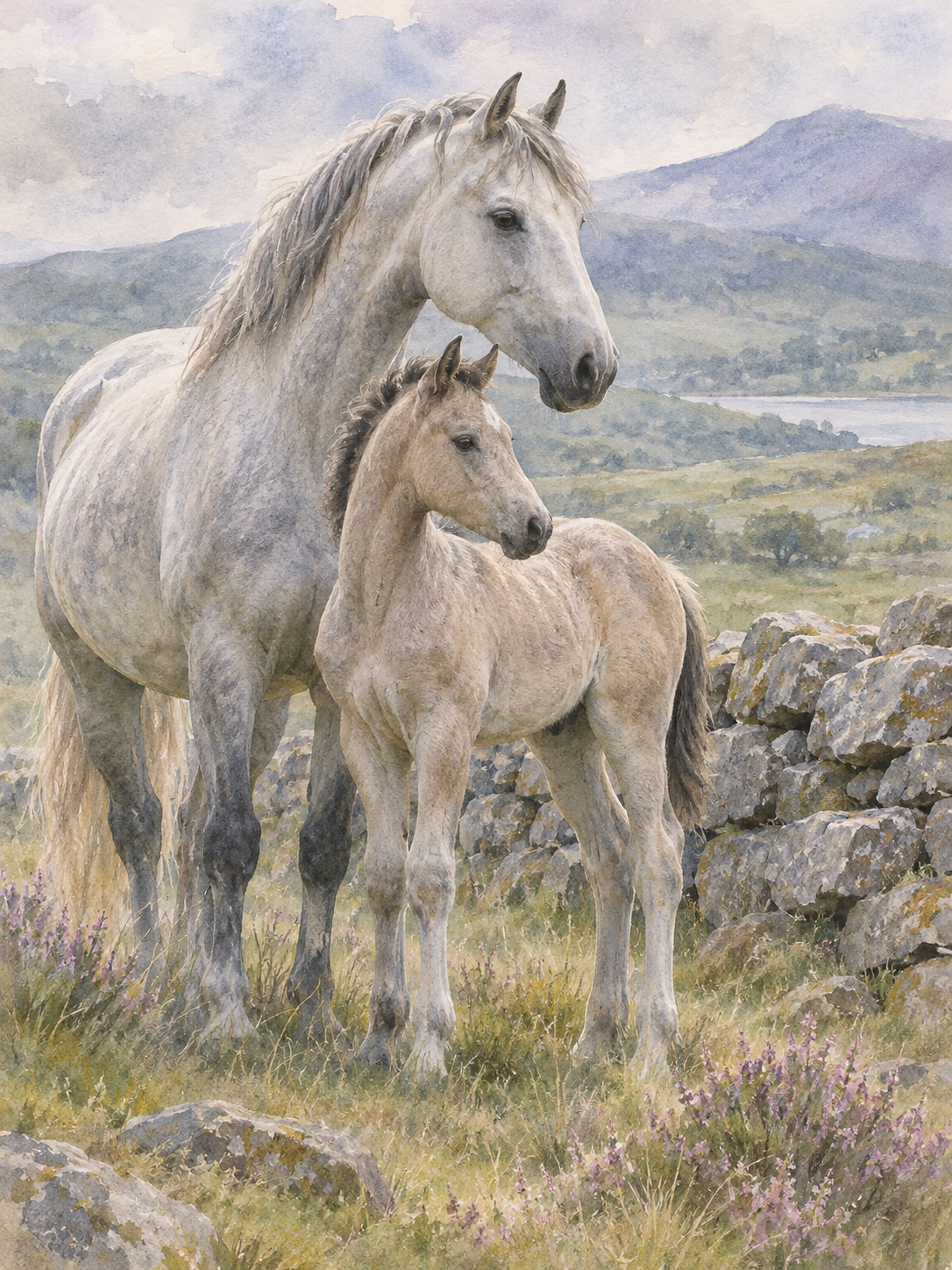
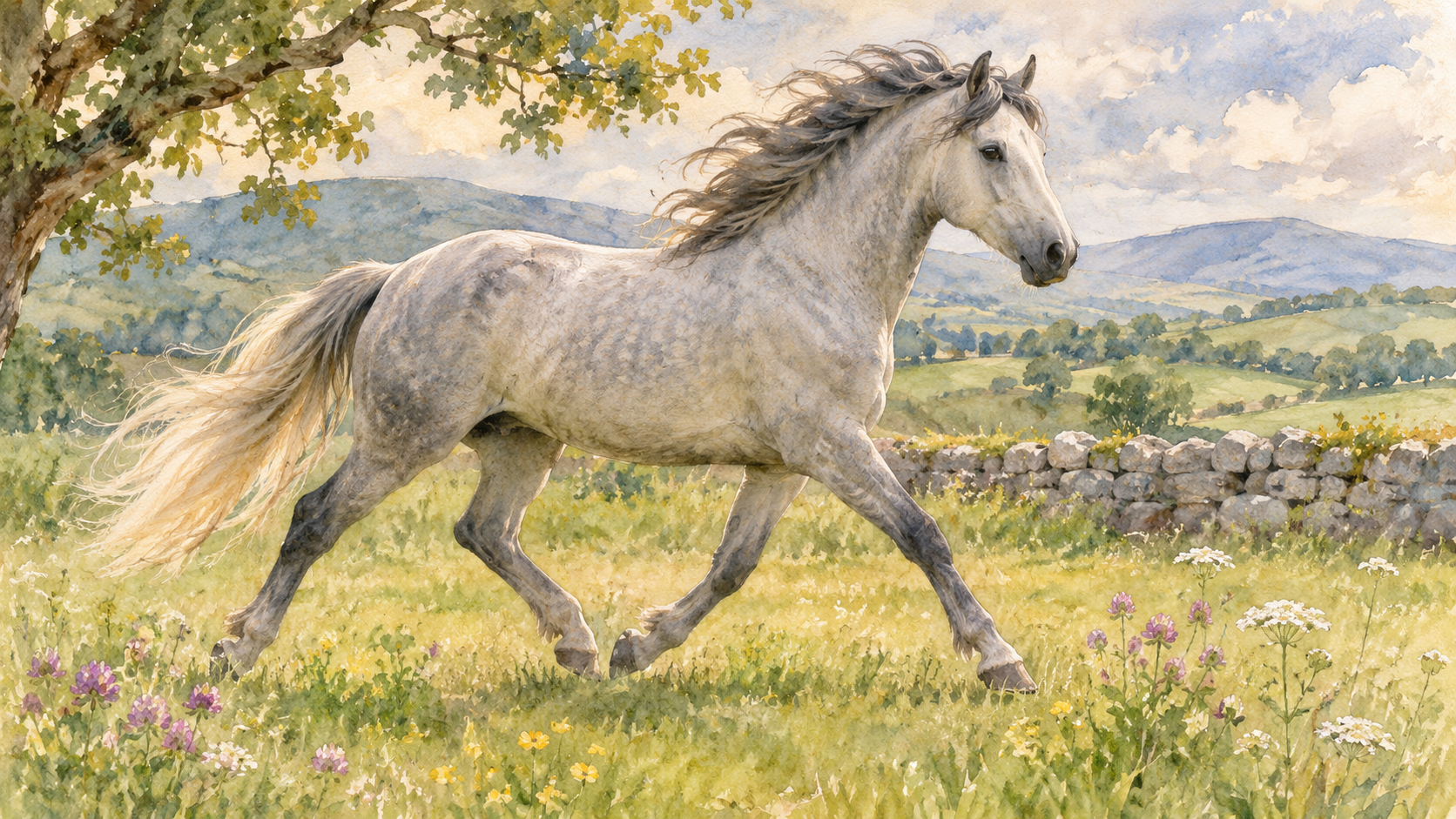
Illustrations are artistic interpretations, not diagnostic or anatomical diagrams. They show the general impression of the subject, not a specific horse or a measurement guide.

Previous Post
Next Post





For more of our latest photos and inspiration, follow along on instagram at @instapony_.
© Redbud Ranch 2020 | Connemara Sport Horses and Ponies | photos by Lisa Martin |
terms & Condtions |
privacy Policy
Intentionally Bred with People in Mind
Browns Valley, CA
+ Show / Hide Comments
Share to: