


Using pedigrees responsibly in a relatively small breed population
Why the words matter
Linebreeding generally describes a form of related mating intended to concentrate ancestry from a particular family or influential ancestor. Inbreeding is the broader genetic concept of mating related individuals. Outcrossing describes mating individuals that are less closely related within the relevant breeding population; it does not necessarily mean crossing to another breed. These terms are sometimes used loosely in sales descriptions, so examine the actual pedigree.
Concentrating strengths can concentrate risks
Related parents can increase the likelihood that offspring inherit identical copies of genetic variants from shared ancestors. This may make some characteristics more consistent, but it can also expose harmful recessive variants and contribute to reduced genetic diversity. A celebrated ancestor appearing repeatedly in a pedigree is not, by itself, evidence that a mating is wise.
Understanding the inbreeding coefficient
A pedigree-based coefficient of inbreeding estimates the probability that two copies of a gene are identical by descent from a shared ancestor. Its usefulness depends on the completeness and depth of the pedigree. A five-generation calculation and a much deeper calculation may give different impressions. Genomic measures can add information when available, but no single number is a full assessment of breeding merit or health.
Outcrossing within the breed
Choosing a less-related purebred Connemara may help diversify ancestry while retaining breed identity. However, “unrelated on paper” may reflect missing pedigree information, and an outcross is not automatically superior in type, temperament, or health. Compare the individual horses and the families behind them. Breeding goals should include soundness, character, and function as well as relatedness.
Genetic testing is specific, not universal
HWSD testing is a useful example of targeted genetic risk management. It can inform a particular mating, but it does not measure every recessive risk or predict overall athletic quality. The existence of a test should encourage thoughtful mate selection rather than indiscriminate removal of healthy carriers from a small population.
Build a balanced mating plan
Identify shared ancestors and examine several generations. Research relatives and progeny for health, temperament, type, and performance. Record what is known and what remains uncertain. Consider whether a proposed mating improves the mare’s weaknesses without sacrificing her strengths. Preserving diversity is not separate from producing quality; it is part of maintaining the breed’s future options.
Related reading: Preserving Genetic Diversity · Understanding Heritability · Understanding HWSD
References and further reading
- ACPS breed standard: https://acps.org/about-connemaras/
- UC Davis Veterinary Genetics Laboratory: https://vgl.ucdavis.edu/
- Finno HWSD scientific review
Editorial note: Educational guidance only. Individual health, lameness, and breeding questions should be discussed with a qualified veterinarian and the relevant breed registry.
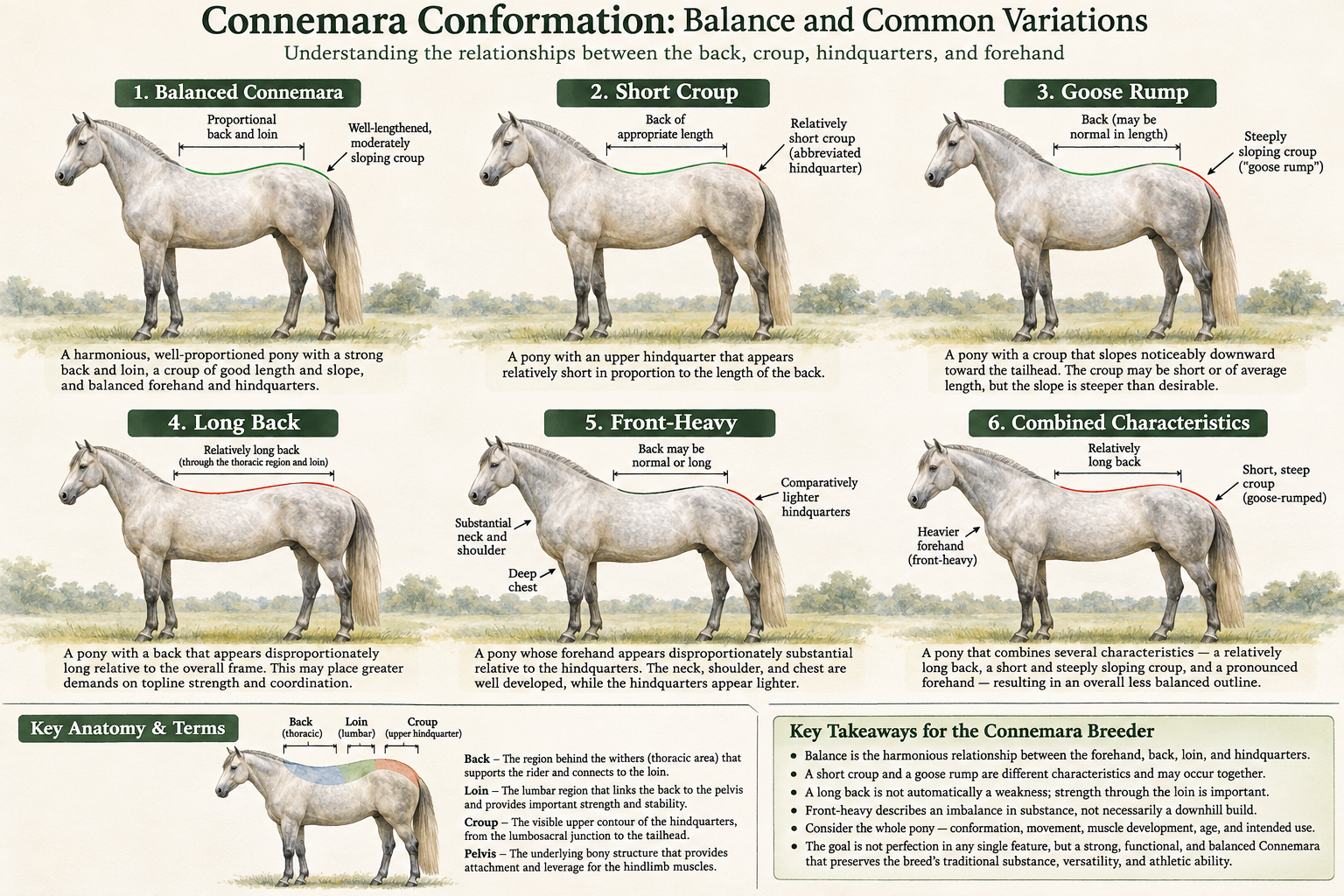
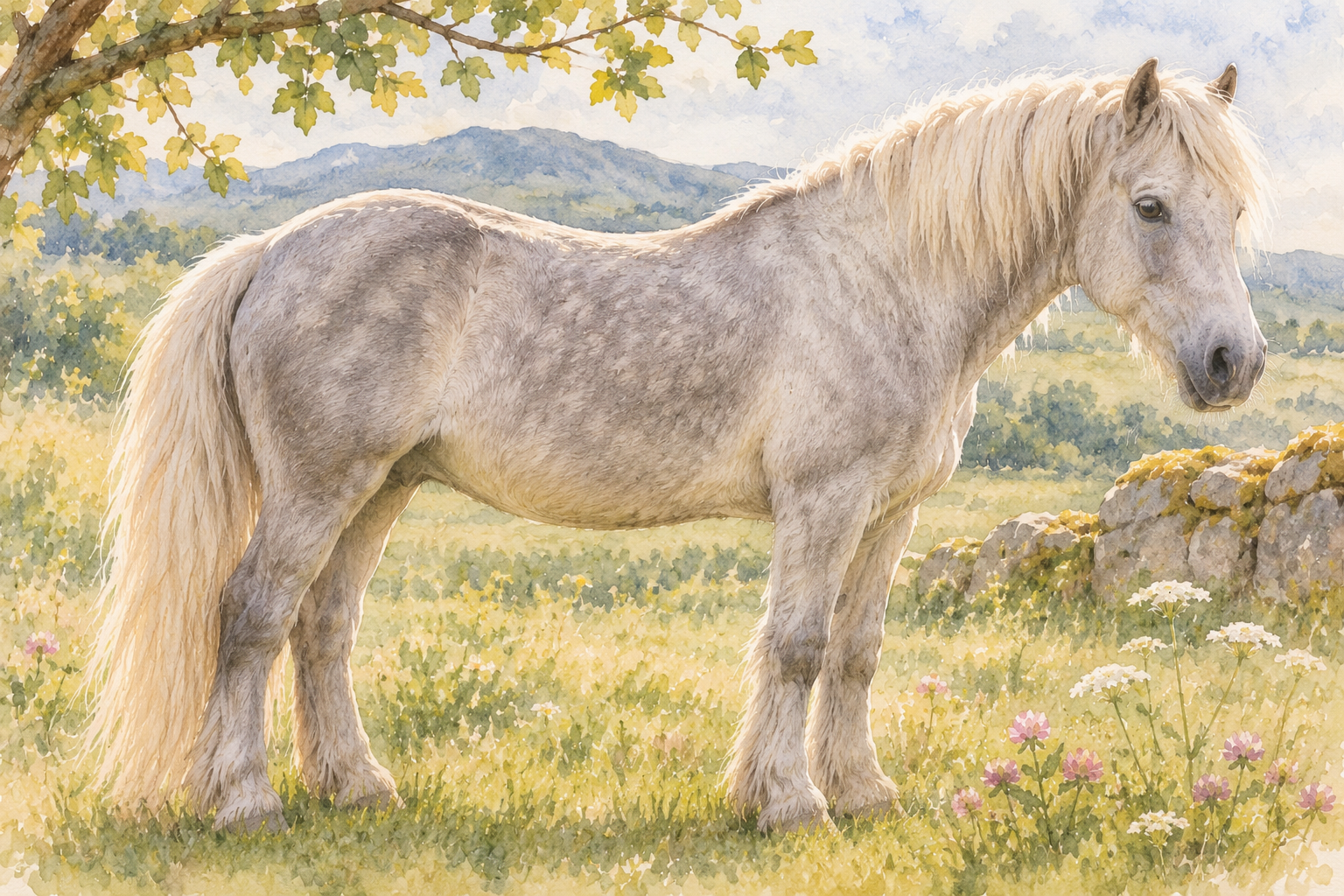
Illustrations are artistic interpretations, not diagnostic or anatomical diagrams. They show the general impression of the subject, not a specific horse or a measurement guide.





For more of our latest photos and inspiration, follow along on instagram at @instapony_.
© Redbud Ranch 2020 | Connemara Sport Horses and Ponies | photos by Lisa Martin |
terms & Condtions |
privacy Policy
Intentionally Bred with People in Mind
Browns Valley, CA
+ Show / Hide Comments
Share to: