


Development is not a race
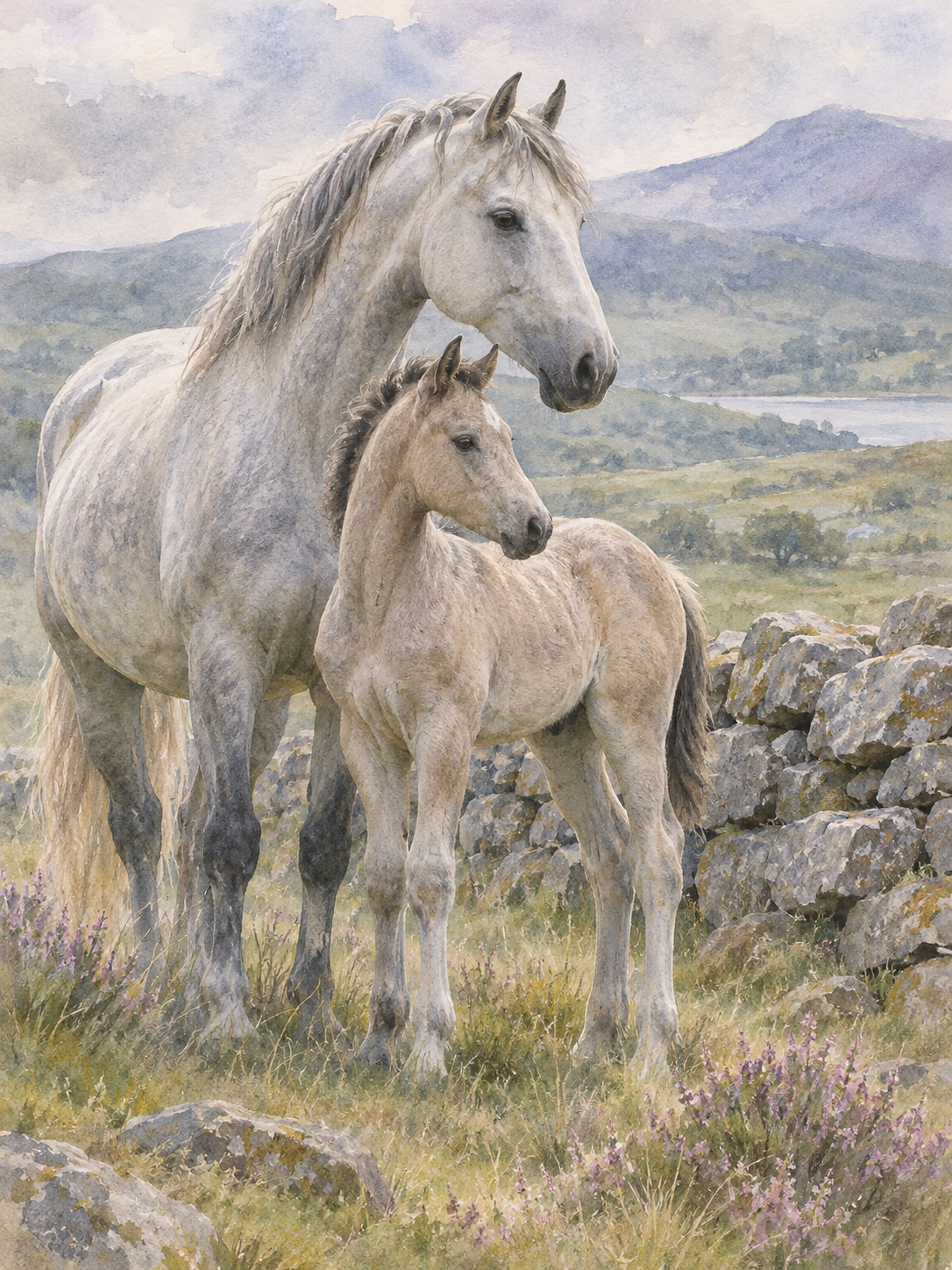
Young Connemaras mature at individual rates. A youngster who looks awkward during a growth phase may later become balanced; an early standout is not guaranteed to remain superior. Judge progress over time rather than at one moment — and if you keep youngstock for any length of time, you will be wrong in both directions often enough to learn humility about it.
Connemaras are a slow-maturing breed, and that is a feature, not a delay. One of our own fillies stood 14.1 hands as a youngster and measures 14.3¼ at four years old — still growing, still changing shape, and only now beginning to look like the mare she will be. The breed rewards the breeder who can wait. Every decision in this article follows from that one fact.
Forage, growth, and condition
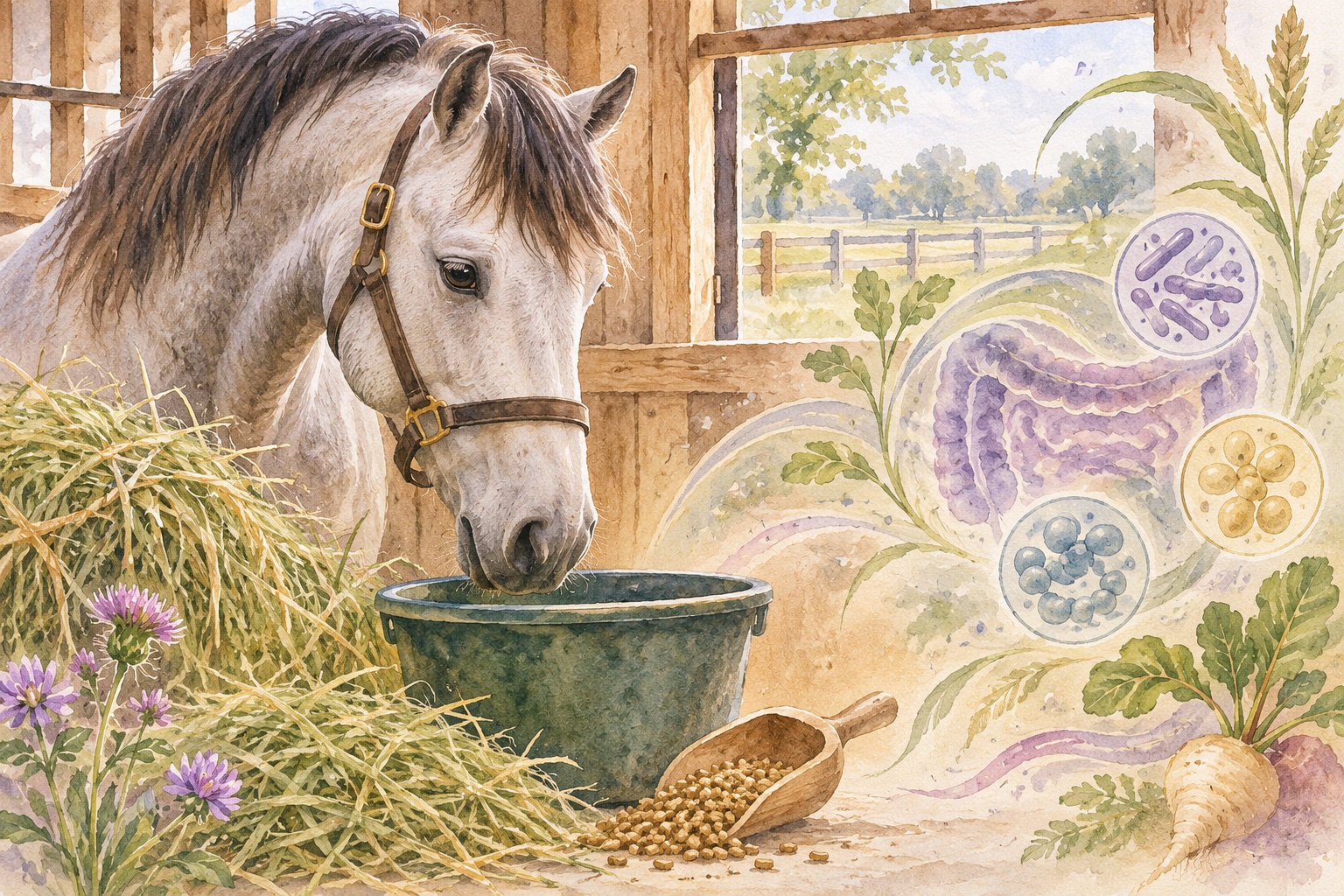
Provide forage-led nutrition with minerals and energy suited to age, workload, pasture, and body condition. Rapid weight gain and excessive condition are not desirable growth goals. A fat yearling is not a well-grown yearling; it is a youngster whose joints and metabolism are carrying a load nobody asked them to carry, and the association between forced growth and developmental problems is reason enough to feed for steady, moderate progress.
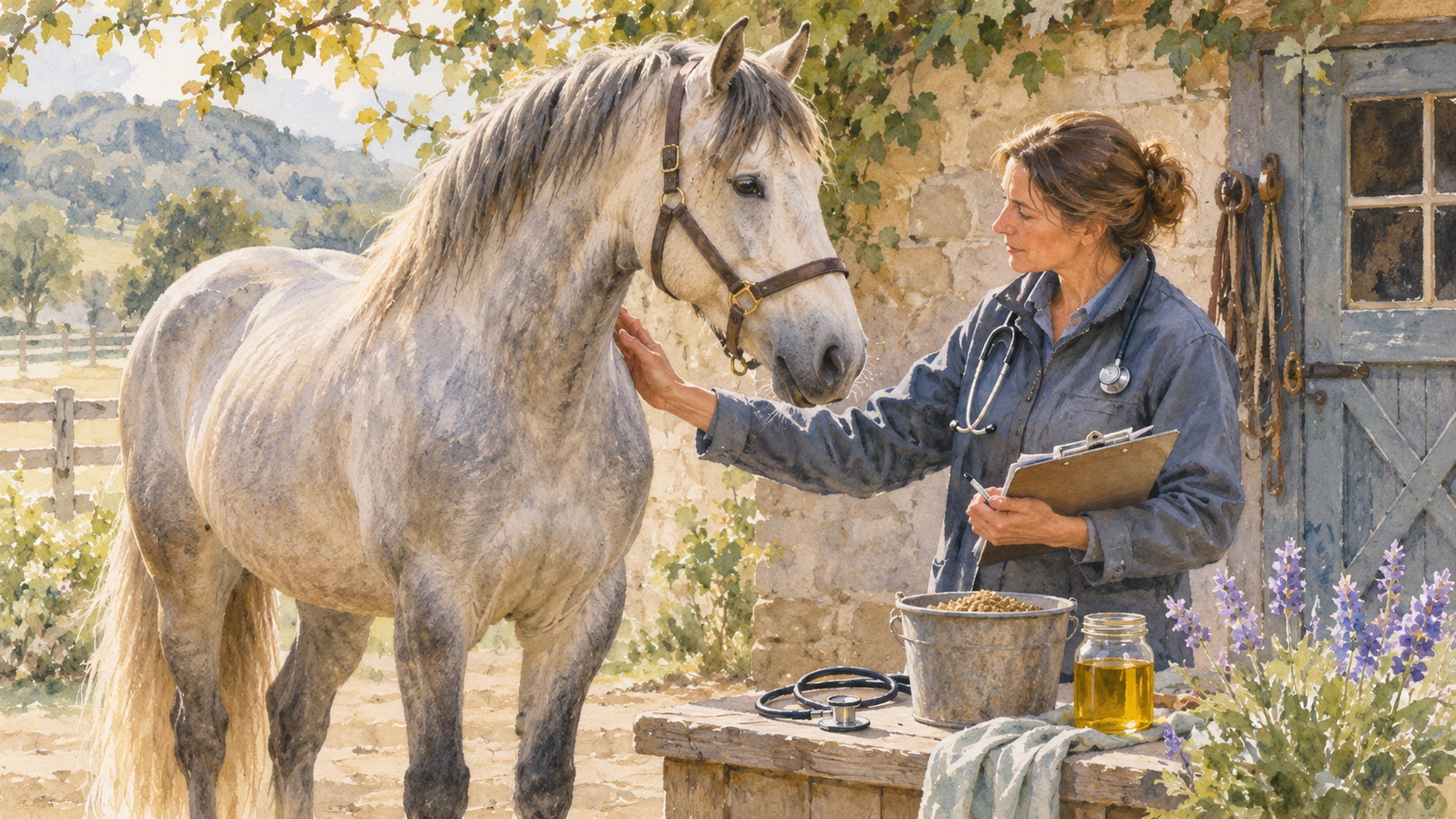
Work with an equine veterinarian or nutrition professional when evaluating the diet of growing horses, and re-evaluate as they grow — the ration that suited the weanling will not suit the gangly two-year-old in a growth spurt, and pasture changes the arithmetic with every season. Check condition with your hands as well as your eyes; a winter coat on a Connemara can hide a great deal, in both directions.
Movement and companionship
Safe turnout and social contact support normal behavior and physical development. Young horses raised with other horses learn how to be horses: how to read another animal, how to play without injury, how to be low in a hierarchy without being frightened by it. Those lessons show up years later, under saddle, in company, at shows.
Match pasture, fencing, group dynamics, and handling to the youngster’s age and circumstances, and watch groupings honestly — a youngster who is bullied away from feed is not on the ration you think he is. Consistent, calm routines are more valuable than prolonged repetitive schooling. Free movement on decent ground does more for a young Connemara’s future soundness than any amount of early work in a circle.
Let the breed be the breed
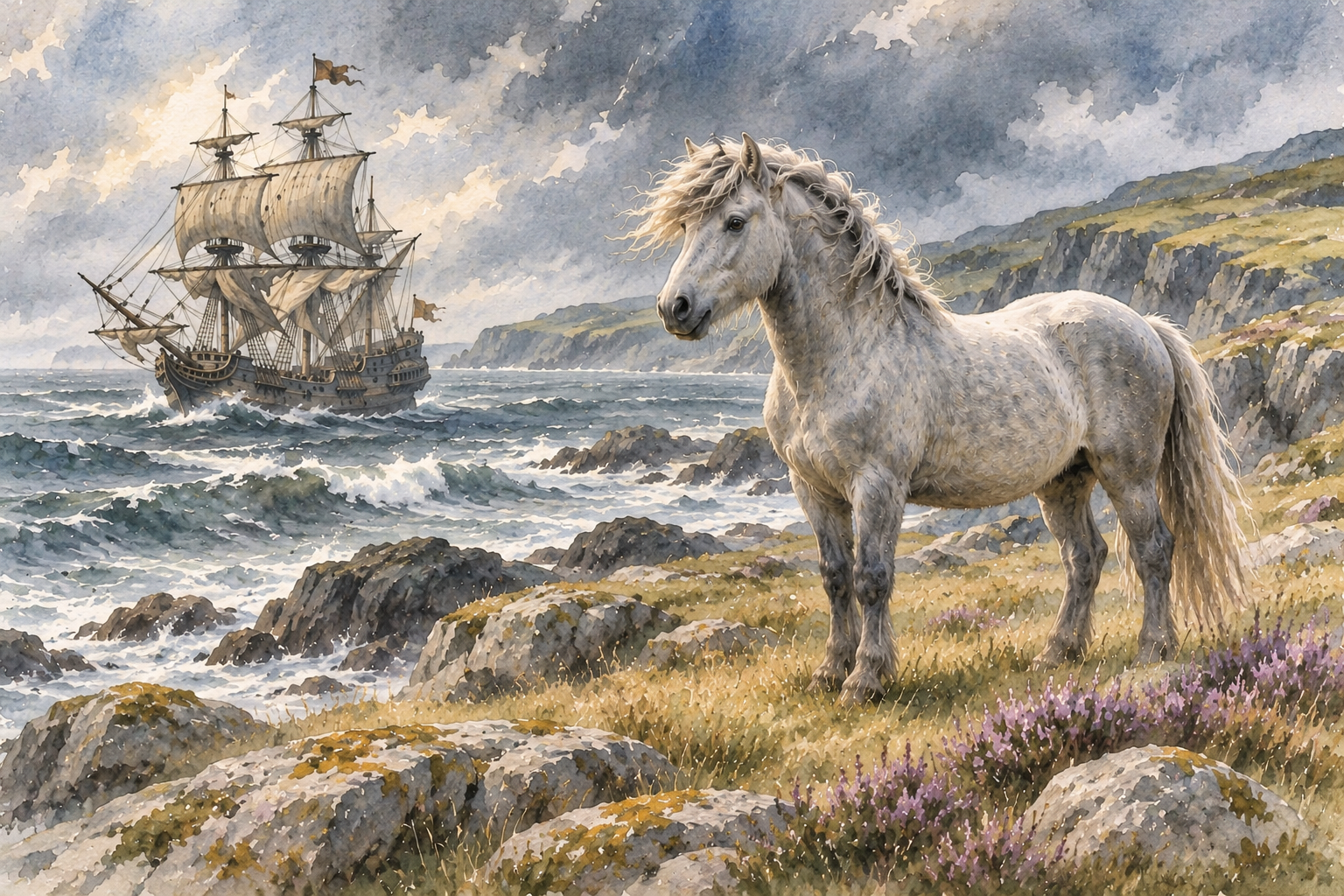
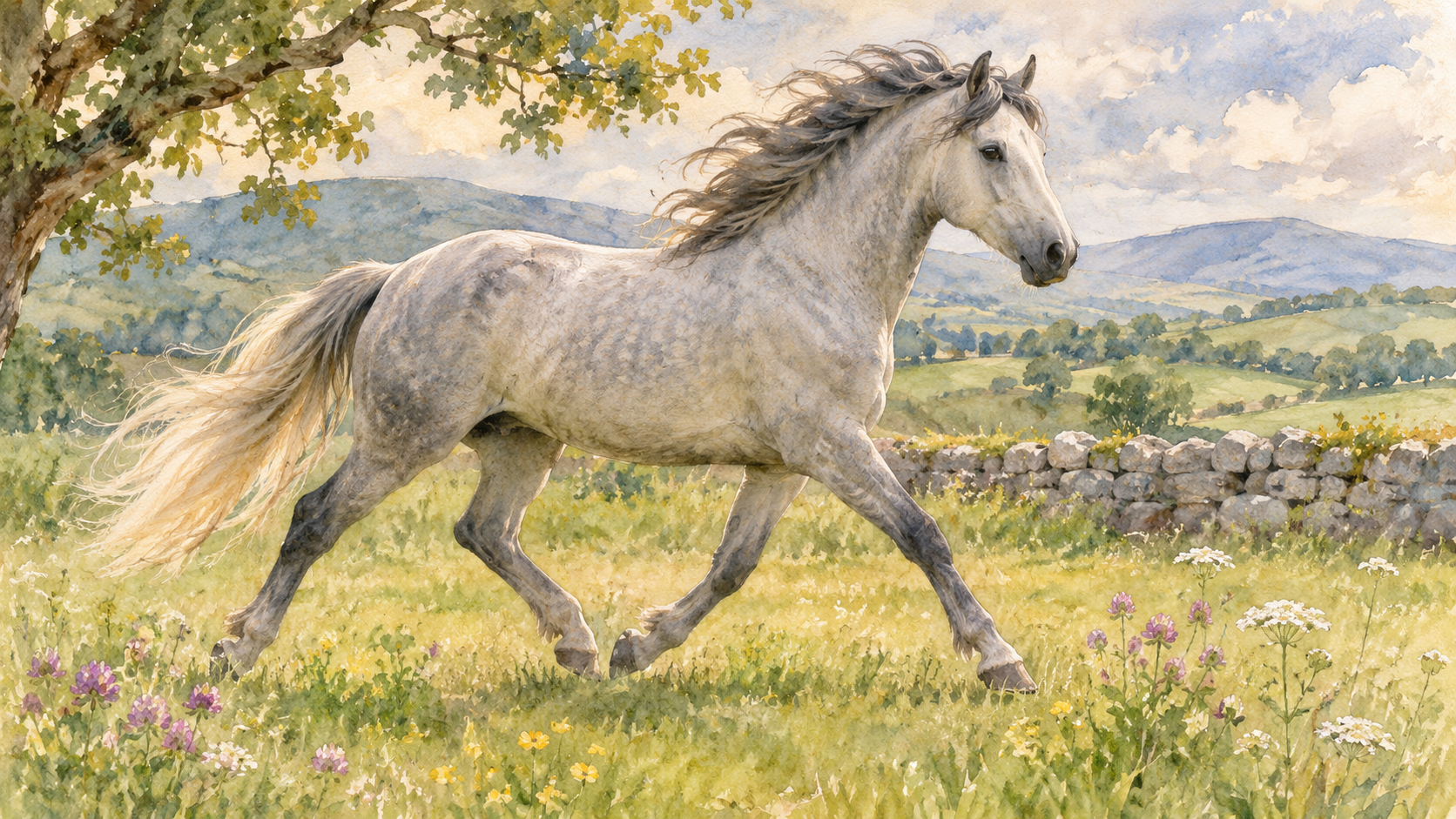
Connemaras were shaped by rough, rocky ground in the west of Ireland, and it shows: sure-footedness, good bone, and a strong sense of self-preservation are breed traits, not accidents. Varied, decent terrain and genuine turnout suit them far better than a padded, flat existence — the breed’s famous “fifth leg” is developed by using it.
Two breed-common management points belong in every young Connemara’s file. First, easy keeping cuts both ways: rich pasture, especially in spring, is a laminitis risk for native youngsters, and growth should never be chased with feed. Second, sweet itch — allergy to biting midges — is common in this breed, and a youngster who starts rubbing is telling you something worth managing early (rugging, shelter or stabling at dawn and dusk, and a conversation with your veterinarian) rather than dismissing as a phase.
Teach useful life skills
Introduce leading, tying with supervision, grooming, hoof handling, loading, and veterinary procedures gradually and positively. Keep sessions short and age-appropriate. The goal is a confident, cooperative pony, not a youngster drilled to perform adult work.
Think of it as installing the basics the horse will use for life: stand for the farrier, load without drama, accept a thermometer and a bandage, lead past the frightening thing and think about it on the other side. Ten calm minutes a few times a week accomplishes more than an occasional long session, and it accomplishes it without spending the youngster’s goodwill. Every adult horse who is “good to do” was a youngster somebody taught patiently; every difficult one is usually a receipt for the opposite.
Observe rather than label
Photograph the youngster standing square at regular intervals and keep notes on feet, alignment, temperament, and movement. The photographs matter because memory edits ruthlessly — the photo file will show you the upright phase you worried about at eighteen months and had forgotten by three, and it will stop you condemning, or crowning, a youngster on a single season’s evidence.
Seek veterinary advice for persistent lameness, swelling, pain, or concerning developmental changes. Do not assume every irregularity will disappear with maturity — most growth phases pass, but “he’ll grow out of it” is a diagnosis nobody should make from the fence line.
Prepare for a future role
A good upbringing preserves physical and mental welfare while laying a foundation for later training. Whether the horse becomes a family pony, a sport horse, or a breeding prospect, patience remains a practical breeding virtue. The young Connemara you raise slowly is the adult who is still sound, sane, and working happily at fifteen — which is, in the end, the product this breed is famous for.
References and further reading
American Connemara Pony Society · ACPS inspection criteria · UC Davis Veterinary Genetics Laboratory · American Association of Equine Practitioners · British Connemara Pony Society
Educational information only; not a substitute for veterinary advice, official registry rules, or individual professional assessment. Confirm current requirements and recommendations before breeding.






For more of our latest photos and inspiration, follow along on instagram at @instapony_.
© Redbud Ranch 2020 | Connemara Sport Horses and Ponies | photos by Lisa Martin |
terms & Condtions |
privacy Policy
Intentionally Bred with People in Mind
Browns Valley, CA
+ Show / Hide Comments
Share to: