


Size That Fits Real Life
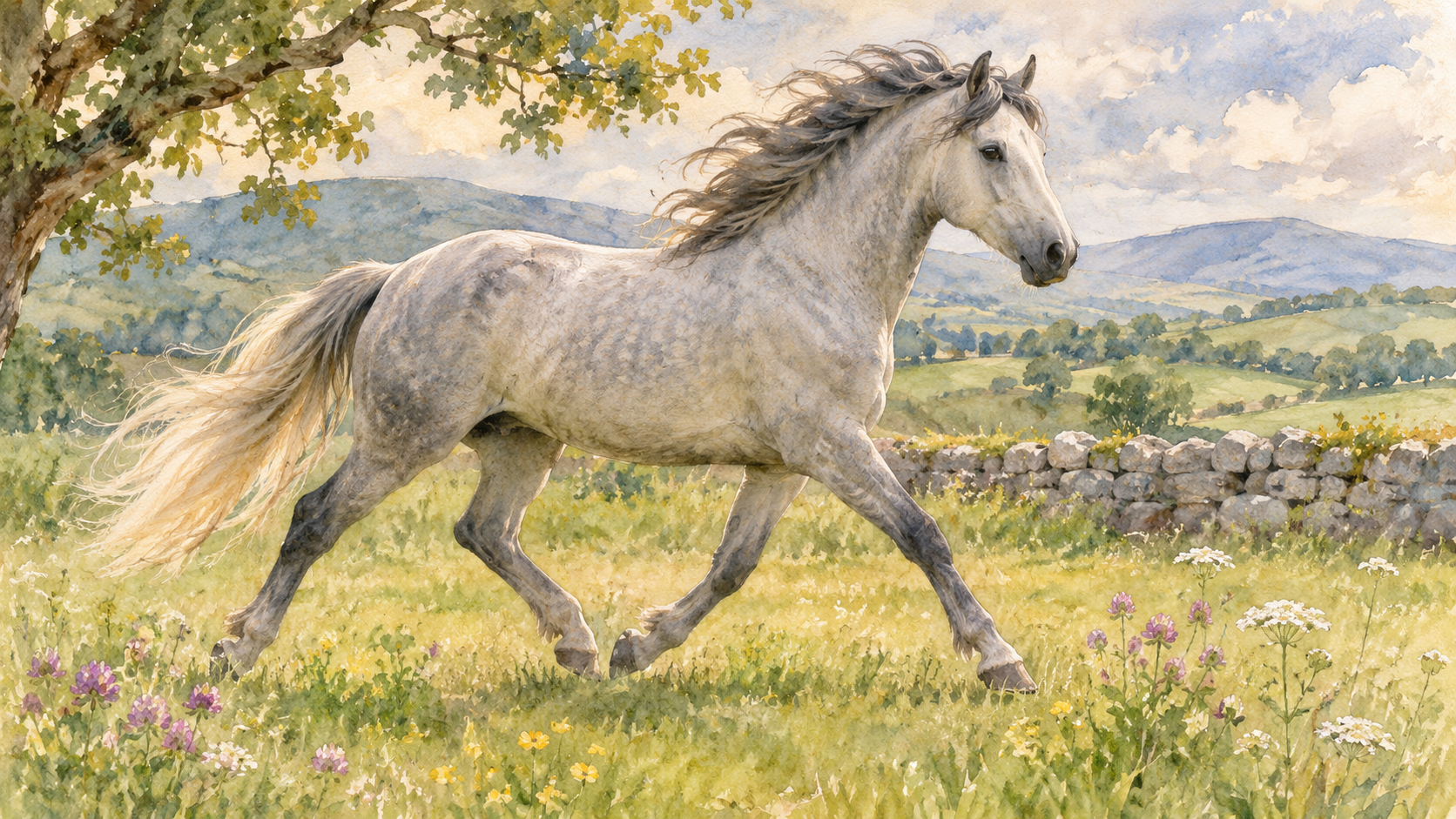
A purebred Connemara stands 13 to 15 hands, with 14 to 14.2 hands the average, according to the American Connemara Pony Society. The Irish standard is 128 to 148 centimeters, about 12.2 to 14.2 hands. A cross with a Thoroughbred or a sport horse mare is often taller than that, and that is part of the point. You get a horse in the 15-hand range that still has pony bone, pony substance, and pony sense, rather than a big, long-legged horse that needs a professional to keep it together.
Size matters in practical ways. A 14.2-hand horse is easier to mount from the ground out on the trail, and it eats less than a 17-hand warmblood, which matters when you are paying for hay by the bale. A smaller horse with good bone and a deep rib cage can carry an adult rider comfortably. I don’t put a number on that, because it depends on the horse’s build, the rider’s balance, and the work asked. Ask the breeder or seller honestly whether the horse is built to carry you, watch it move under a rider your size, and don’t be talked into a horse too slight for the job or too big to handle on the ground. The right size is the size you can manage on your worst day, not just your best one.
There is also confidence. A lot of adult amateurs come back after years away, or start later in life, and the ground looks a long way down from a big horse. A Connemara cross puts you closer to the ground, on a quick, sure-footed horse. Confidence is what keeps people riding.
The Brain Comes First
The breed standard describes the Connemara temperament as mannerly and manageable, kind, responsive, possessing good sense and basic intelligence. The American Connemara Pony Society calls a gentle disposition the breed’s most outstanding characteristic. I have lived with these ponies long enough to know that is not just nice wording. It is the reason the cross works for an amateur.
A good-minded horse forgives a mistake. It does not fall apart when the rider gets tense, or the lesson runs long, or the trailer ride is longer than planned. It is sensible. It thinks before it reacts. That does not mean it is dull. Connemaras are clever, and a clever horse that is bored will invent its own entertainment, which is why I always tell buyers that a smart horse needs a job and a routine, not just a paddock and good intentions. But clever and sensible together is the combination that keeps an amateur rider safe and keeps a horse in the same home for years.
This is why temperament is my first selection criterion, ahead of movement, ahead of jumping talent, ahead of everything. I do not want silly horses. I want good-minded, easy-to-handle, sensible horses with a strong sense of self-preservation. If a horse has to choose between a big jump and keeping itself upright, I want the horse that keeps itself upright. That sense of self-preservation is what makes a horse safe for a rider who is not a professional. A professional can ride through a silly moment. An amateur should not have to.
When you go to see a horse, watch the brain before you watch the movement. How does it stand to be caught? How does it lead? How does it stand for the farrier and the vet? What does it do when something surprises it — does it stop and look, or does it leave? A horse that stops and looks is telling you something important about how it will behave under saddle. I would rather have the horse that looks than the horse that is flashy for five minutes and frightening for the other fifty-five.
What the Cross Does Well, Realistically
Connemaras have a natural jumping ability, and the breed’s rectangular build suits dressage as well. Crossed with a Thoroughbred or a sport horse, you get a horse that can do a bit of everything: lower-level eventing, dressage through the lower and middle levels, local jumpers, hunter paces, trail riding, and family riding. The same horse that goes to a show one weekend can take you out on the trail the next. That versatility is the whole appeal for an amateur. Most of us cannot keep one horse for dressage, one for jumping, and one for trails. We need one horse that does most things well and enjoys its work.
Be realistic about levels, though. I have bred Connemara crosses since 2002, and I will not tell you that every cross is going to the upper levels, because that is not true of any breed, and it is not what most buyers need to hear. What I can tell you is that a well-bred, well-managed cross with a good mind will take an amateur a long way: through the lower levels of eventing, up through the dressage levels that most riders actually ride, and over fences at the heights most of us actually jump. If one of mine ends up with a competitive rider and proves the genetics at a higher level, that is wonderful, and I hope it happens. But I do not breed for that rider and hope the amateur can cope. I breed for the amateur and let the rest take care of itself.
Performance, in my view, comes from genetics plus management plus money. Shows display performance; they do not create it. A horse that is fed well, kept sound, and ridden kindly will show you what it can do. A horse that is pushed too fast, fed badly, or ridden by someone who frightens it will not, whatever its pedigree says.
Matching the Horse to the Rider, Honestly
The most common mistake I see is buying the horse you wish you were ready for instead of the horse you are ready for now. A green youngster is cheaper than a made horse, and it is tempting. But a green horse and a green rider is a hard combination, and it is how both lose confidence. If you have limited time, a horse already going kindly under saddle, even if it costs more, is usually the better buy. Be honest about which rider you are, and about how much help you actually have.
Ask yourself, before you go shopping:
- How many days a week will I really ride, in winter as well as summer?
- Do I have an instructor or an experienced friend I can call when something goes wrong?
- What do I actually want to do — trail ride, compete a little, do both?
- What can I manage on the ground, alone, on a bad day?
- What can I afford to feed and keep, month after month, not just the purchase price?
A Connemara cross is an easy keeper more often than not, which helps the monthly feed bill, but easy keepers still need tested hay, a balancer, and attention to weight.
There is one more honest point, and it matters. A horse that is right for you should feel right on the ground before it ever feels right under saddle. If you are nervous handling it on the lead rope, you will not be braver on its back. Walk away from the horse that frightens you on the ground, however pretty it is. There are other horses. There is only one of you.
Why I Breed This Way
I have had horses since I was 11, and I have bred Connemara crosses since 2002. What lasts is temperament. The horses people keep are the horses they enjoy being around. The horses passed from home to home are usually the ones that frightened someone, or the ones nobody could handle on a bad day.
So I breed the horse I would want to ride myself, at 60, on my own place, with no professional down the road to sort things out. A horse with a good mind, a strong sense of self-preservation, enough ability to be fun, and a size I can manage. If that sounds like the horse you are looking for, you are the rider I breed for.
Sources: American Connemara Pony Society, “About Connemaras,” https://acps.org/about-connemaras/8/ (height 13–15 hands, average 14–14.2 hands; temperament wording; natural jumping ability; maturity and longevity). Connemara Pony Breeders’ Society standard height 128–148 cm, as summarized at https://creatures.com/species/horse/connemara-pony.






For more of our latest photos and inspiration, follow along on instagram at @instapony_.
© Redbud Ranch 2020 | Connemara Sport Horses and Ponies | photos by Lisa Martin |
terms & Condtions |
privacy Policy
Intentionally Bred with People in Mind
Browns Valley, CA
+ Show / Hide Comments
Share to: