
The Aging Easy Keeper: When a Pony Is Fat, Losing Muscle, and Still Not Thriving
November 14, 2026


Understanding the complicated relationship between aging, insulin regulation, body condition, and muscle health in the Connemara pony.
By Lisa Martin, Ballymoon Farm.
The pony who never needed much
There is something wonderfully reassuring about an old Connemara.
The familiar face, the substantial bone, the thick mane, and the quiet confidence of a pony who has spent a lifetime doing exactly what was asked of him.
He may have raised children, competed in dressage, carried riders across country, or simply been a beloved companion.
And through most of those years, he may have been remarkably easy to keep.
A modest ration, decent forage, and a little pasture were often enough to maintain his condition.
But as he grows older, something begins to change.
His topline softens. The muscles over his back and hindquarters become less pronounced. His abdomen appears rounder, and his neck may develop a heavier crest.
He is not necessarily losing weight.
In fact, he may still be carrying too much.
Yet beneath that familiar, well-covered appearance, he may be losing the very tissue that supports strength, mobility, and long-term soundness.
This is one of the more complicated challenges of managing an aging, easy-keeping pony.
How can a horse be overweight and losing condition at the same time?
The answer begins with understanding that body weight, body fat, and muscle are three different things.
Fat and muscle tell different stories
A horse’s body condition score primarily evaluates fat coverage.
It does not directly measure muscle mass.
An older pony can therefore maintain a body condition score that appears acceptable—or even excessive—while progressively losing muscle along the topline.
This distinction is particularly important in native breeds, where depth of body and substantial build may make changes difficult to recognize.
A rounded belly does not necessarily indicate adequate nutrition.
A prominent crest does not demonstrate good muscle development.
And a horse that maintains its weight may still be experiencing meaningful changes in body composition.
Muscle loss in older horses can have several contributing causes.
Reduced exercise is one. A pony that once worked regularly may gradually become less active, losing the stimulus needed to maintain muscle.
Dental disease may limit effective chewing and nutrient intake.
Chronic pain, including osteoarthritis, may discourage movement.
Inadequate dietary protein or essential amino acids may compromise muscle maintenance, particularly when calories are being restricted to control weight.
Endocrine disorders, including pituitary pars intermedia dysfunction (PPID), can also contribute to changes in muscle and fat distribution.
Aging itself may influence muscle maintenance, although not every older horse experiences the same degree of decline.
The important point is that muscle loss is not a diagnosis.
It is a clinical finding that deserves investigation.
The metabolic complication
Some easy-keeping ponies develop insulin dysregulation, a central feature of equine metabolic syndrome (EMS).
Insulin dysregulation may involve excessive insulin responses to feeding, reduced tissue sensitivity to insulin, or impaired insulin regulation.
It is particularly important because prolonged or excessive insulin concentrations can increase the risk of endocrinopathic laminitis.
An older pony may have substantial fat deposits, insulin dysregulation, and declining muscle mass at the same time.
However, these findings should not automatically be attributed to one disease.
PPID and EMS are distinct conditions, although they can coexist.
A pony with PPID may also have insulin dysregulation, increasing its laminitis risk.
Conversely, an overweight pony with insulin dysregulation may have no evidence of PPID.
Appropriate diagnostic testing helps distinguish these possibilities.
Where inflammation enters the picture
Adipose tissue is not simply a passive energy reserve.
It produces hormones and signaling molecules that interact with the immune and endocrine systems.
In some metabolically affected horses, researchers have identified inflammatory changes within adipose tissue.
These findings suggest that obesity-related metabolic dysfunction can involve altered immune signaling.
But the relationship is not straightforward.
Not every overweight pony demonstrates measurable systemic inflammation.
And not every pony with insulin dysregulation has abnormal inflammatory markers.
The term inflammaging describes age-associated changes in immune regulation and persistent low-grade inflammatory activity, a concept studied extensively in other species.
Equine researchers are increasingly interested in how aging affects immunity, inflammatory signaling, and tissue function.
Nevertheless, the evidence is not sufficient to attribute an older pony’s muscle loss, stiffness, or declining performance to inflammaging alone.
An aging horse may have osteoarthritis, dental disease, PPID, chronic infection, inadequate nutrition, or several overlapping problems.
The most useful approach is to identify what is actually happening rather than assuming that inflammation explains everything.
The Connemara connection: substance is not muscle
The Connemara breed standard values substance, strength, and functional conformation.
A well-made Connemara should have depth through the body, good bone, and the physical capacity to carry a rider and perform athletic work.
These qualities should be preserved throughout the pony’s life.
But a substantial frame can sometimes conceal declining muscle development.
A broad body is not necessarily a strong body.
Likewise, the generous condition often associated with easy-keeping ponies should not be mistaken for good metabolic health.
For an aging Connemara, evaluating muscle separately from fat becomes especially valuable.
The topline, hindquarters, neck, and overall movement deserve attention alongside traditional body-condition scoring.
Photographs taken at regular intervals can reveal gradual changes that are difficult to recognize when we see the same pony every day.
Feeding the pony who needs less energy but more support
One of the greatest nutritional challenges is providing adequate nutrients without supplying excessive calories.
A senior pony with excess body fat may not need more energy.
But it still needs sufficient quality protein, essential amino acids, vitamins, and minerals to support tissue maintenance.
Simply reducing the entire ration can create nutritional deficiencies.
This is particularly relevant when an owner cuts back concentrates without considering whether the remaining forage supplies adequate lysine, other essential amino acids, copper, zinc, selenium, and vitamin E.
The solution is not necessarily a conventional senior feed.
Many senior feeds are formulated to provide substantial calories and may be inappropriate for an overweight, insulin-dysregulated pony.
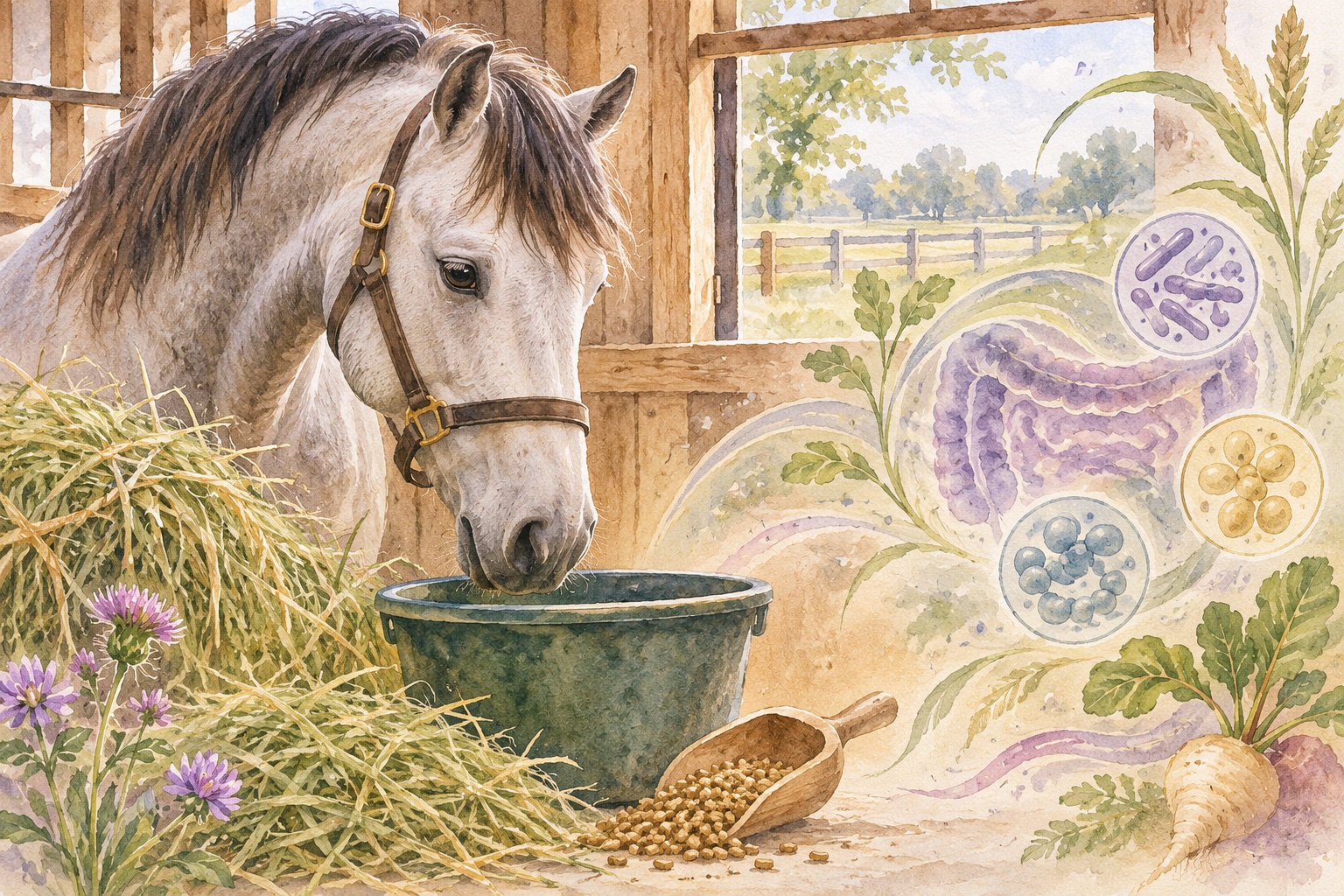
A suitable ration may instead include analyzed forage, an appropriate vitamin-mineral balancer, and a carefully selected protein source when needed.
The best ration depends on forage analysis, dental function, metabolic status, and individual requirements.
For ponies with poor dentition, soaked forage replacements may be necessary, but their sugar and starch content must still be considered.
Exercise and the preservation of muscle
Muscle is maintained partly through use.
For an older pony that is comfortable and medically stable, regular appropriate movement can help preserve strength, mobility, and insulin sensitivity.
Exercise does not have to mean demanding ridden work.
Hand walking, controlled groundwork, turnout that encourages movement, and carefully managed conditioning may all be useful.
The objective is consistency.
A short period of appropriate daily activity may be more beneficial than occasional strenuous exercise followed by several days of inactivity.
However, a pony with active laminitis should not be exercised until veterinary assessment confirms that movement is safe.
Likewise, pain from arthritis or other orthopedic conditions should be addressed before increasing activity.
Movement is valuable, but it must be appropriate to the individual horse.
When to investigate further
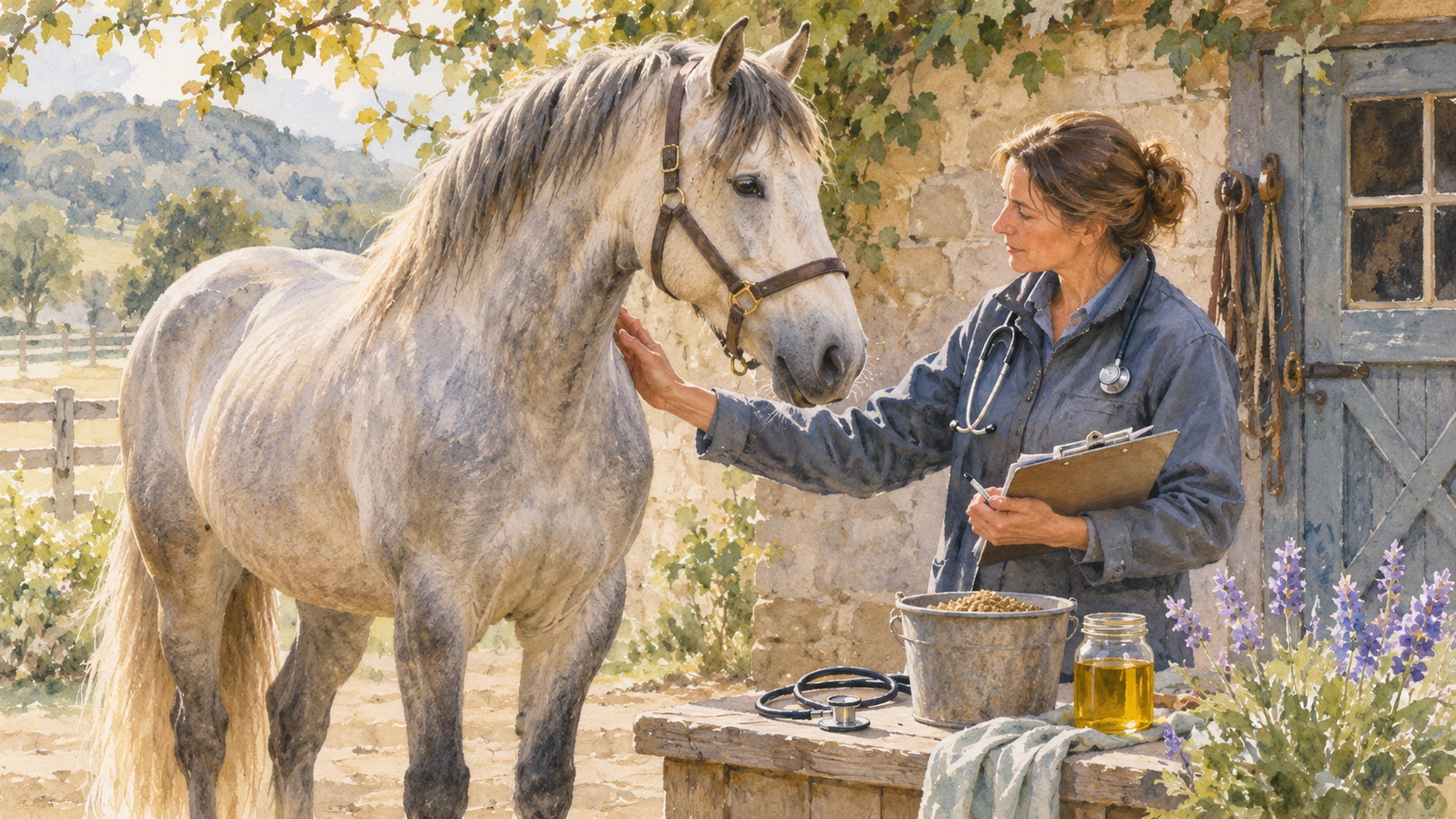
An older pony that is losing muscle despite maintaining body weight deserves a systematic evaluation.
A veterinarian may recommend dental examination, nutritional assessment, metabolic testing, and investigation of pain or other disease.
Testing for PPID may be appropriate, particularly when muscle loss accompanies changes in coat shedding, recurrent infections, altered fat distribution, or laminitis.
Insulin testing may be warranted when regional adiposity, obesity, or a history of laminitis raises concern about insulin dysregulation.
Importantly, a normal body-condition score does not rule out metabolic disease.
Nor does an elevated inflammatory marker automatically explain muscle loss.
The aim is to understand the individual pony rather than to assign every change to old age.
The responsibility of longevity
Connemaras are often valued for their long useful lives.
Their hardiness, intelligence, and versatility make them exceptional partners, and many continue to provide companionship and enjoyment well into their senior years.
But longevity brings responsibility.
The feeding program that suited a pony at ten may not be appropriate at twenty-five.
The exercise that once maintained his muscle may need adjustment.
And the familiar rounded appearance of an easy keeper may no longer tell us enough about his health.
Good senior management requires us to look beneath the surface.
To distinguish fat from muscle.
To recognize metabolic risk without assuming disease.
To provide adequate nutrition without unnecessary calories.
And to understand that preserving the Connemara’s substance means preserving the functional strength beneath it.
The goal is not simply to keep an old pony alive.
It is to help him remain comfortable, capable, and unmistakably himself for as long as possible.
—
This article belongs to The Inflammation Series in the Connemara Breeder’s Library:
- The Quiet Fire: What a Mare’s Inflammation Means for Her Foal
- The Inflamed Easy Keeper: When Fat Becomes More Than Fat
- The Aging Easy Keeper: When a Pony Is Fat, Losing Muscle, and Still Not Thriving
- The Cresty Neck Conundrum: When Regional Fat Tells a Bigger Story
- The Invisible Inflammation: Can a Healthy-Looking Horse Be Inflamed?
- The Gut–Immune Connection: Where Digestion Meets Inflammation
- Measuring the Invisible: What Equine Bloodwork Can—And Cannot—Tell Us
- When Inflammation Becomes Chronic: Finding the Underlying Cause
Research and veterinary references
- Equine Endocrinology Group. Recommendations for the Diagnosis and Management of Equine Metabolic Syndrome (2022).
- Equine Endocrinology Group. Recommendations for the Diagnosis and Management of Pituitary Pars Intermedia Dysfunction (2023).
- Durham AE, et al. ECEIM consensus statement on equine metabolic syndrome. Journal of Veterinary Internal Medicine (2019).
- McFarlane D. Research on aging, immune function, and PPID in horses.
- National Research Council. Nutrient Requirements of Horses, 6th revised edition (2007).
This article provides educational information and does not replace individual veterinary assessment.
Ballymoon Farm | The Breeder’s Library










For more of our latest photos and inspiration, follow along on instagram at @instapony_.
© Redbud Ranch 2020 | Connemara Sport Horses and Ponies | photos by Lisa Martin |
terms & Condtions |
privacy Policy
Intentionally Bred with People in Mind
Browns Valley, CA
+ Show / Hide Comments
Share to: