
The Gut–Immune Connection: Where Digestion Meets Inflammation
November 14, 2026


How forage, microbial fermentation, and the equine digestive system influence health far beyond the feed bucket.
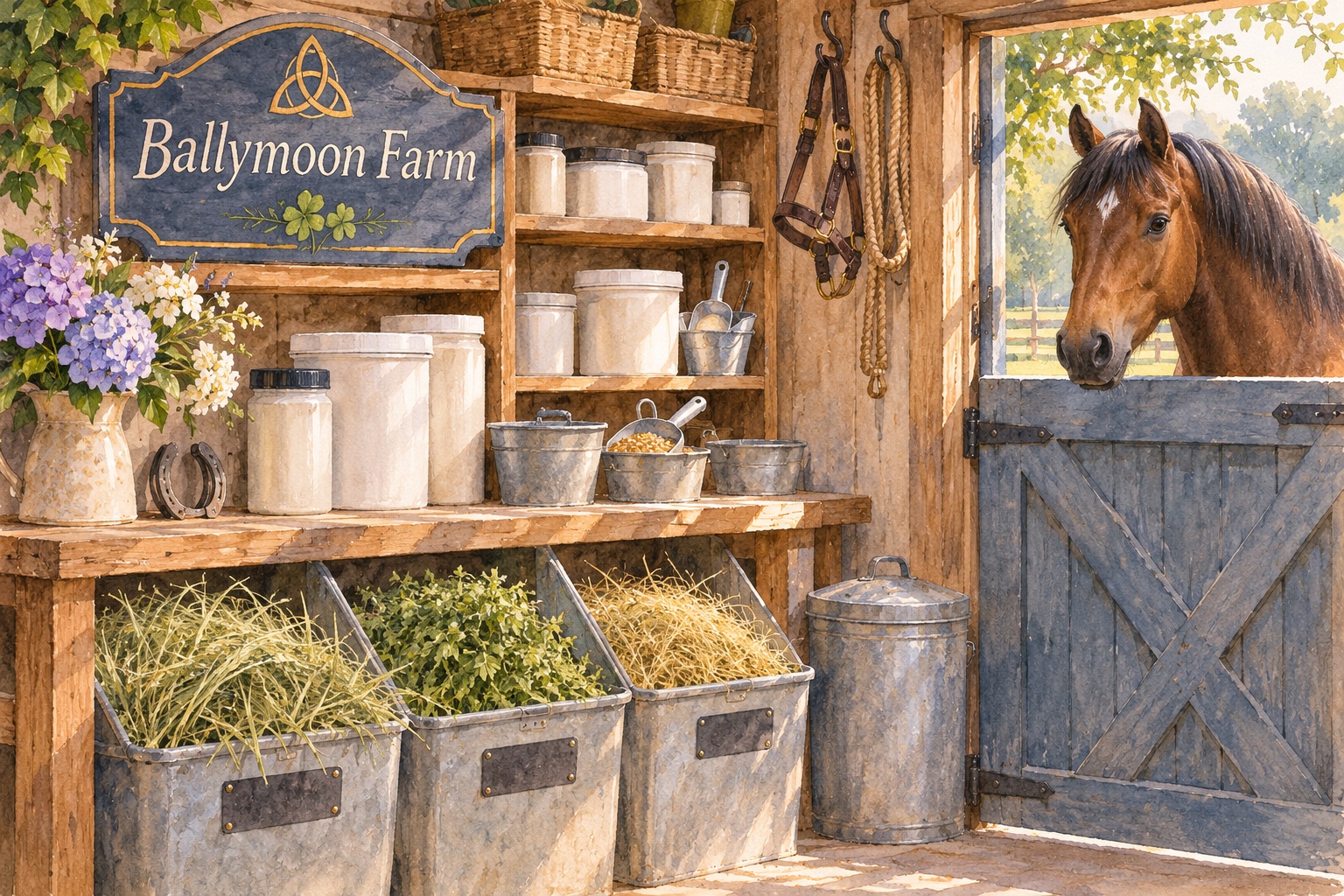
By Lisa Martin, Ballymoon Farm.
The extraordinary world inside a horse
Every horse owner understands the importance of good forage.
We know that horses evolved to graze, that sudden dietary changes can be dangerous, and that excessive concentrates can upset digestion.
But the significance of forage extends well beyond providing calories.
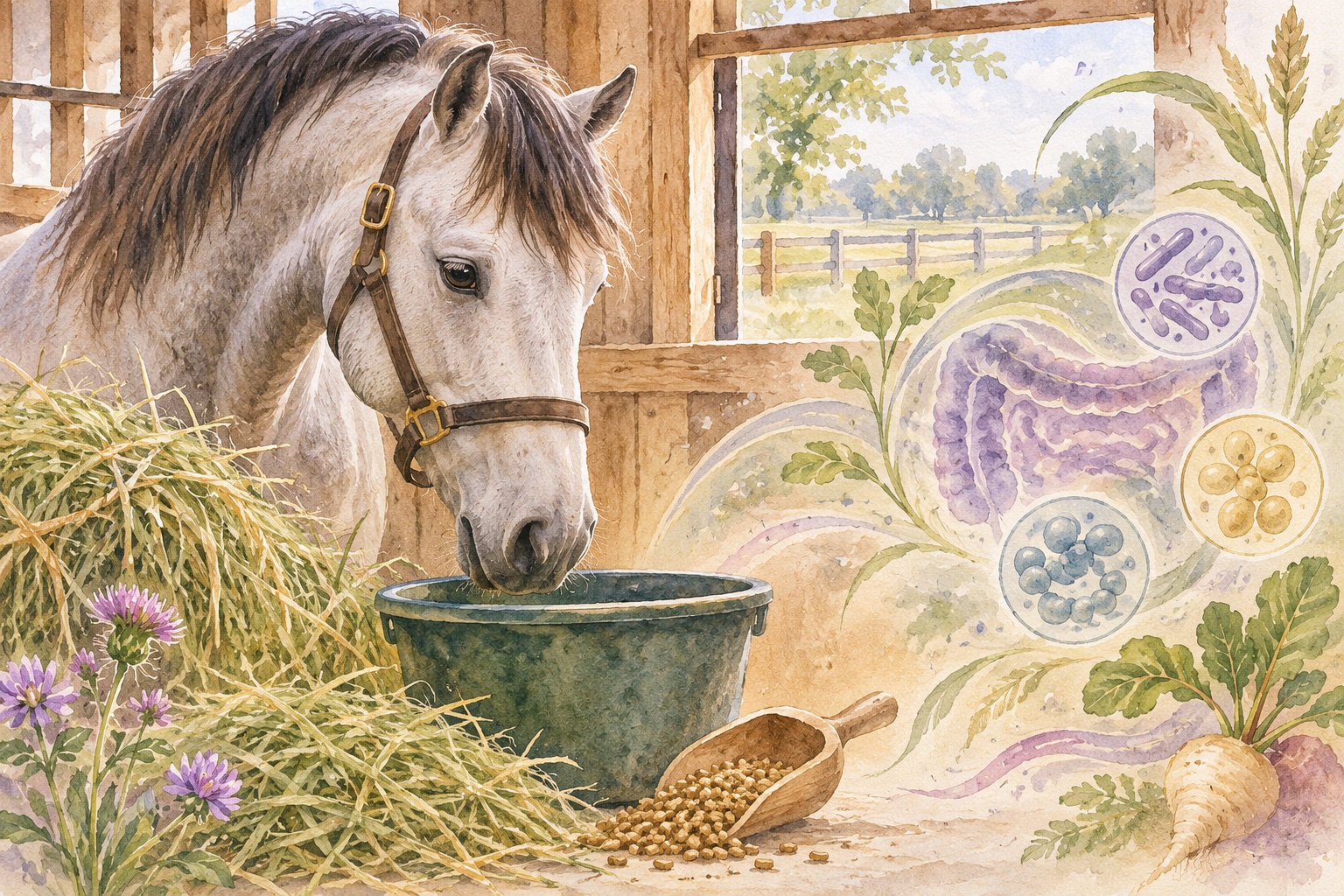
Inside the horse’s large intestine lives an extraordinarily complex community of bacteria, archaea, fungi, and other microorganisms.
Together, these organisms form the hindgut microbiome.
They help ferment plant fiber into short-chain fatty acids that the horse can use for energy.
They also participate in nutrient metabolism and interact with the tissues and immune defenses lining the digestive tract.
The horse does not digest forage alone.
It depends upon an entire microbial community to help accomplish the task.
And when that community is disturbed, the consequences may extend beyond digestion.
The hindgut is a living ecosystem
Unlike ruminants, horses perform much of their microbial fermentation after food has passed through the stomach and small intestine.
The cecum and large colon provide an environment in which microorganisms break down structural carbohydrates from forage.
Under stable conditions, this process supports efficient fiber digestion and produces useful fermentation products.
But microbial communities respond to changes in their environment.
Feed composition, feeding frequency, medications, stress, illness, and abrupt ration changes can all influence microbial populations.
Researchers use the term dysbiosis to describe disturbances in the composition or function of a microbial community.
However, there is no single universally accepted definition of a healthy equine microbiome.
A change in bacterial populations does not automatically mean that a horse is diseased.
The important questions are whether microbial function has been disrupted and whether that disruption has measurable consequences for the horse.
What happens when too much starch reaches the hindgut?
Horses have a limited capacity to digest starch in the small intestine.
When a meal contains more starch than can be digested before reaching the hindgut, the remaining starch becomes available for rapid microbial fermentation.
This can alter the microbial population and increase the production of lactic acid and other fermentation products.
In substantial disturbances, hindgut pH may decline.
The environment becomes less favorable for some fiber-digesting organisms and more favorable for microbes adapted to rapidly fermentable carbohydrates.
Severe disturbances can contribute to gastrointestinal disease, including colitis.
Experimental carbohydrate-overload models have also demonstrated links among hindgut disturbance, systemic inflammatory responses, and laminitis.
But it is important not to confuse these experimentally induced inflammatory processes with the hyperinsulinemia-associated laminitis seen in many easy-keeping ponies.
They involve different initiating mechanisms.
How does the gut communicate with the immune system?
The intestinal lining performs two essential tasks.
It allows nutrients and other necessary substances to be absorbed while helping restrict the passage of harmful microorganisms and their components.
This selective barrier is supported by epithelial cells, mucus, immune defenses, and the microbial environment.
When the intestinal barrier is severely compromised, microbial products such as endotoxin may enter the circulation and stimulate systemic inflammatory responses.
This is especially important in serious gastrointestinal disease.
Researchers are also investigating whether more subtle changes in intestinal permeability and microbial signaling contribute to metabolic or inflammatory conditions.
The biological mechanisms are plausible.
But in horses, the evidence connecting ordinary variations in the microbiome to persistent, low-grade whole-body inflammation remains incomplete.
A commercial test showing that a horse’s microbial population differs from a reference group cannot, by itself, diagnose systemic inflammation.
The Connemara connection
The Connemara’s reputation for thriving on modest forage makes digestive efficiency a particularly interesting subject.
A naturally efficient pony may meet its energy needs without large amounts of concentrate.
That does not mean every Connemara can safely consume unlimited rich pasture.
Pasture provides fermentable fiber but may also contain substantial sugars, with concentrations varying according to plant species, growth conditions, and season.
For a pony with insulin dysregulation, controlling sugar and starch intake may be essential even when the diet is entirely forage-based.
This distinction is often overlooked.
A forage-first diet is a sound general principle, but forage quality and composition still matter.
The objective is not simply to feed more hay.
It is to feed the right forage for the individual pony.
The senior pony’s digestive challenge
Aging introduces another layer of complexity.
An older pony may develop dental problems that reduce its ability to chew long-stem forage effectively.
Some seniors require soaked hay cubes, chopped forage, or other forage replacements.
These alternatives can be valuable, but their nutritional composition should be evaluated carefully.
A senior easy keeper may need a softer ration without needing additional calories or large quantities of starch.
Older horses may also receive medications for chronic conditions, undergo changes in turnout or exercise, or experience periods of illness that influence appetite and digestion.
These circumstances deserve consideration when evaluating digestive health.
However, age alone does not establish that a horse has an unhealthy microbiome.
Can we improve the microbiome with supplements?
This is one of the most heavily marketed areas of equine nutrition.
Probiotics, prebiotics, yeast cultures, postbiotics, and specialized fibers are promoted for their potential effects on digestive and immune function.
Some studies have demonstrated changes in fermentation characteristics, microbial populations, or selected clinical outcomes.
Other studies have found limited or inconsistent benefits.
Products also differ considerably in microbial strains, ingredients, doses, and manufacturing quality.
Evidence for one formulation cannot automatically be applied to another.
There is currently insufficient evidence to recommend a universal probiotic or yeast supplement as a treatment for chronic systemic inflammation in otherwise healthy horses.
That does not mean these products can never be useful.
It means that the indication, formulation, and expected benefit should be considered individually.
The importance of ordinary management
Before adding a supplement, consider the foundations of digestive health.
Is the horse receiving adequate forage?
Are feeding changes introduced gradually?
Is the ration appropriate for its metabolic status?
Are dental problems interfering with chewing?
Does the horse have access to clean water and sufficient opportunities for movement?
Is the feeding schedule compatible with normal equine behavior?
These questions may seem unremarkable compared with the promises of advanced microbiome products.
But they address factors we know are important to digestive stability.
For an easy-keeping pony, careful management also means meeting nutrient requirements without supplying excessive energy.
Restricting calories should never mean depriving the horse of essential protein, vitamins, minerals, or adequate forage.
When gut inflammation is more than a nutritional question
Persistent diarrhea, recurrent colic, unexplained weight loss, fever, or other significant gastrointestinal signs require veterinary investigation.
Inflammatory bowel disease, infectious colitis, parasitism, dental disease, and other disorders cannot be reliably distinguished by supplement trials.
A horse with serious intestinal inflammation needs diagnosis and appropriate treatment.
The microbiome may be part of the disease process, but it is not necessarily the primary cause.
Feeding the ecosystem
Perhaps the most useful way to understand the equine gut is to recognize that feeding a horse also means feeding its microbial partners.
Forage quality, dietary consistency, and appropriate nutrient balance help maintain a stable environment for fermentation.
The science of the gut–immune connection is developing rapidly.
It may eventually provide more precise ways to influence health through nutrition.
For now, the strongest foundation remains careful, individualized feeding.
For the Connemara owner, that means respecting the breed’s efficiency without assuming that efficiency makes nutrition simple.
A hardy pony still has a complicated digestive system.
And protecting that system may be one of the most important things we do for its long-term health.
This article belongs to The Inflammation Series in the Connemara Breeder’s Library:
- The Quiet Fire: What a Mare’s Inflammation Means for Her Foal
- The Inflamed Easy Keeper: When Fat Becomes More Than Fat
- The Aging Easy Keeper: When a Pony Is Fat, Losing Muscle, and Still Not Thriving
- The Cresty Neck Conundrum: When Regional Fat Tells a Bigger Story
- The Invisible Inflammation: Can a Healthy-Looking Horse Be Inflamed?
- The Gut–Immune Connection: Where Digestion Meets Inflammation
- Measuring the Invisible: What Equine Bloodwork Can—and Cannot—Tell Us
- When Inflammation Becomes Chronic: Finding the Underlying Cause
References and further reading
Microbiota characterization throughout the digestive tract of horses fed a high-fiber vs. a high-starch diet. (2024). Available through PubMed Central.
From Diet to Disease: The Role of the Gut Microbiome and Microbial Metabolites in Horses. (2026). Veterinary Sciences.
National Research Council. Nutrient Requirements of Horses, 6th revised edition (2007).
Equine Endocrinology Group. Recommendations for the Diagnosis and Management of Equine Metabolic Syndrome (2022).
Educational information only. Persistent gastrointestinal signs require veterinary assessment.
Ballymoon Farm | The Breeder’s Library








For more of our latest photos and inspiration, follow along on instagram at @instapony_.
© Redbud Ranch 2020 | Connemara Sport Horses and Ponies | photos by Lisa Martin |
terms & Condtions |
privacy Policy
Intentionally Bred with People in Mind
Browns Valley, CA
+ Show / Hide Comments
Share to: