
The Quiet Fire: What a Mare’s Inflammation Means for Her Foal
November 14, 2026


How maternal condition, metabolic health, and nutrition may shape the next generation of Connemaras.
By Lisa Martin, Ballymoon Farm.
Two kinds of inflammation
Every horse owner recognizes the obvious kind of inflammation: the hot, swollen leg, the laminitic foot, the joint that fills after work. It announces itself, and we respond.
There is another kind, far less visible.
Low-grade inflammation is a persistent state of immune activity that may accompany obesity and metabolic dysfunction. There may be no heat, no swelling, and no outward sign that anything is wrong.
A mare carrying excess condition may appear perfectly healthy. Her coat may shine. She may be content, fertile, and producing beautiful foals.
Yet beneath that reassuring appearance, her metabolism may be telling another story.
Research into maternal obesity suggests that these changes can influence not only the mare’s health but also the developing foal’s metabolic and skeletal development.
For breeders, particularly those working with naturally efficient, easy-keeping breeds such as the Connemara, the implications deserve attention.
The study: one stallion, two groups of mares
In a 2018 study published in PLoS ONE, researchers examined 24 broodmares, all inseminated using semen from the same stallion.
Ten mares were classified as having normal body condition, while fourteen were classified as obese.
The researchers monitored the mares throughout gestation, measuring body condition, insulin sensitivity, and metabolic and inflammatory markers.
Their foals were then followed through eighteen months of age, with assessments of growth, insulin regulation, inflammation, and osteochondrosis.
The question was deceptively simple:
Could a mare’s excess body condition before and during pregnancy influence the health of her offspring long after birth?
The findings suggested that it could.
The fat mare is not simply a well-fed mare
For generations, breeders have associated generous condition with good broodmare management.
A mare carrying a little extra weight was often considered well prepared for pregnancy and lactation.
But excess fat is not merely stored energy.
Adipose tissue is metabolically active. It produces signaling molecules, including hormones and inflammatory mediators, that influence insulin regulation, appetite, and immune function.
In the Robles study, obese mares had higher circulating leptin and serum amyloid A (SAA), along with reduced insulin sensitivity, compared with mares in normal condition.
SAA is an inflammatory marker. Although commonly used to investigate infection and other inflammatory conditions, it can also provide information in research examining low-grade inflammation.
Importantly, an elevated SAA result alone cannot establish that obesity is responsible. Many other inflammatory conditions can influence it.
Nevertheless, the overall metabolic pattern was significant.
These mares were not simply heavier.
Their internal physiological environment was different.
And that environment was the one in which their foals developed.
The foal looks fine — at first
Perhaps the most compelling finding was what the researchers did not see.
The foals born to obese mares did not show significant differences in overall growth compared with foals from normal-condition mares.
Their outward development offered little indication of what was happening metabolically.
Yet blood testing revealed differences.
Foals born to obese mares had higher SAA concentrations at three and six months of age.
They also demonstrated reduced insulin sensitivity at six and eighteen months.
This matters because insulin is involved in far more than the regulation of blood sugar.
It participates in growth, energy metabolism, and the biological processes supporting developing tissues.
A foal can appear to be growing normally while differences in metabolic regulation remain undetected.
For breeders accustomed to evaluating foals by condition, movement, and physical development, that is an important distinction.
Looking healthy and being metabolically healthy are not necessarily the same thing.
The connection to developing joints
The researchers also examined osteochondrosis, a developmental disorder affecting cartilage and bone within growing joints.
At twelve months of age, osteochondrosis lesions were identified in seven of thirteen evaluated offspring of obese mares, compared with one of ten offspring of mares in normal condition.
This was a statistically significant difference.
However, the differences were not statistically significant at six or eighteen months.
That distinction matters. Osteochondrosis lesions can change during development, and the study does not establish that all affected horses would experience lasting joint disease.
Nor does it prove that maternal obesity alone caused the lesions.
Osteochondrosis is multifactorial. Genetics, growth, nutrition, exercise, and management can all contribute.
What the study does suggest is that the metabolic environment experienced before birth may be one additional influence on developing cartilage and bone.
For breeders producing Connemara Sport Horses intended for dressage, jumping, and eventing, skeletal development is an especially meaningful concern.
Soundness is not simply something we evaluate when a young horse begins work.
Its foundations are being established much earlier.
Why this matters to Connemara breeders
The Connemara’s reputation for hardiness and efficiency is one of the breed’s great strengths.
Developed in an environment where forage could be sparse and conditions demanding, the Connemara became valued for its ability to thrive without extravagant feeding.
That efficiency remains useful.
But in modern management, with improved pasture, conserved forage, and readily available concentrates, it can also present challenges.
Many Connemaras maintain condition on comparatively modest diets. Some develop substantial regional fat deposits before an owner recognizes that their overall condition has become excessive.
A pronounced crest, fat behind the shoulder, deposits around the tailhead, or ribs that are difficult to feel may indicate that a mare is carrying more condition than her silhouette suggests.
Not every overweight Connemara is insulin-dysregulated, and not every insulin-dysregulated pony is visibly obese.
Nevertheless, the combination of easy-keeping tendencies, excess adiposity, and susceptibility to metabolic problems makes careful condition assessment particularly worthwhile.
The Robles research was not conducted specifically in Connemaras. We cannot assume that its numerical findings apply directly to the breed.
But its central question is highly relevant:
What does the metabolic condition of our broodmares mean for the foals we hope to produce?
Breed type is not body condition
There is another distinction worth making, especially in a breed where substance and depth are desirable.
A Connemara should possess good bone, depth of body, sufficient heart room, and the strength associated with a functional native pony.
None of those characteristics requires obesity.
A deep-bodied mare is not necessarily fat.
A substantial mare is not necessarily over-conditioned.
And a mare carrying excess fat does not become more representative of her breed simply because she appears broader or more rounded.
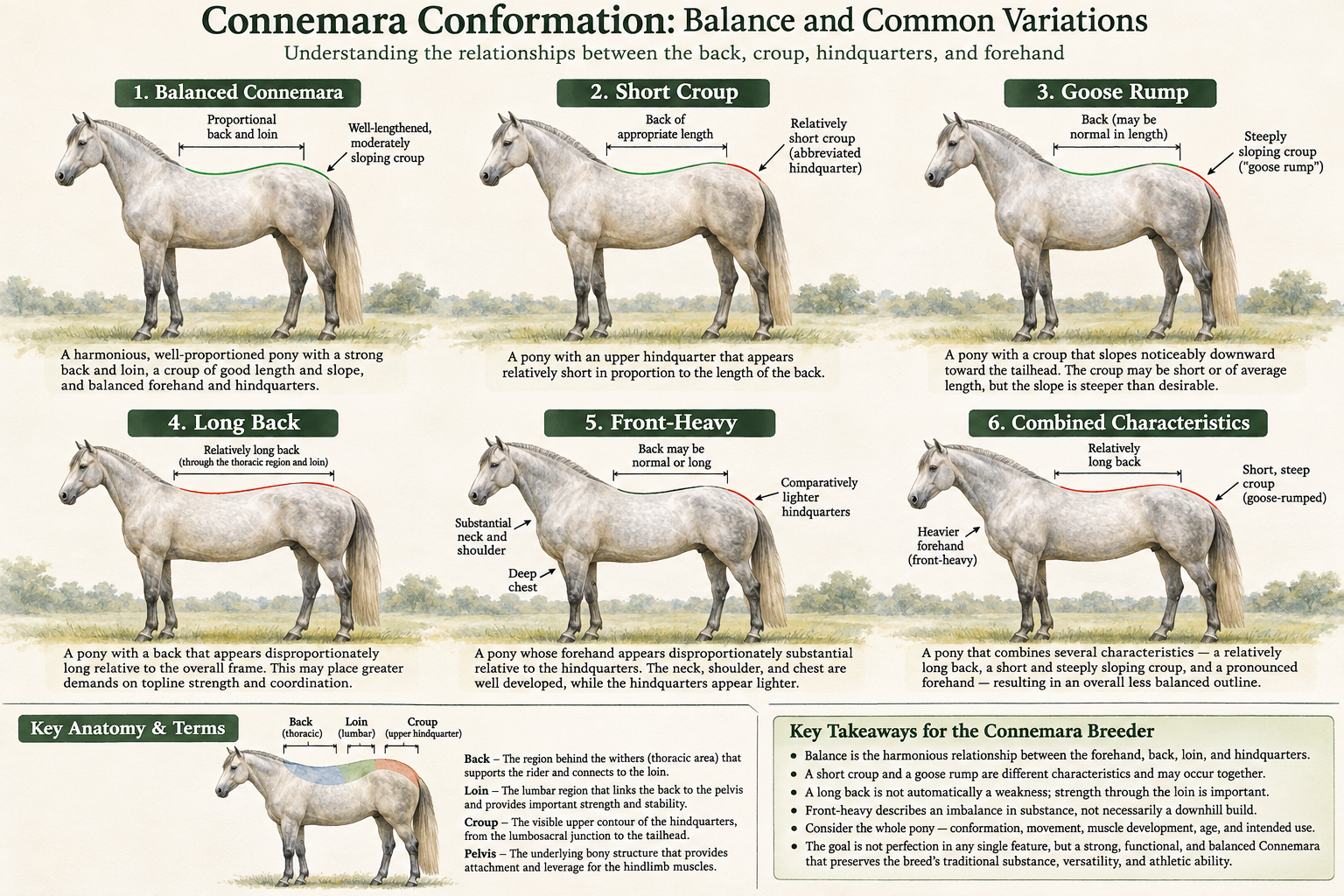
Breed type should be evaluated through conformation, proportion, structure, and functional qualities.
Body condition is a separate assessment.
This distinction is particularly important when evaluating broodmares, where excess flesh can obscure the underlying conformation we are trying to assess.
Preparing the mare before breeding
The practical lesson is not that mares should be thin.
Undernutrition carries its own risks for pregnancy, lactation, and foal development.
The objective is appropriate, stable body condition supported by a nutritionally balanced diet.
The Robles researchers recommended maintaining broodmares around a body condition score of 3/5, approximately equivalent to 6/9 on the commonly used Henneke scale.
That is a useful general reference, not an inflexible target for every individual mare.
For a Connemara broodmare, preparation should begin well before breeding.
A mare carrying excess condition may benefit from a carefully planned reduction in energy intake, appropriate exercise, and evaluation for insulin dysregulation where indicated.
Weight reduction should be gradual, with sufficient forage and adequate protein, vitamins, and minerals.
Pregnancy is not the time for an aggressive weight-loss program.
Likewise, a mare entering breeding season underweight should not be expected to compensate through excessive feeding late in gestation.
The best preparation is steady, thoughtful management long before conception.
The other side of maternal nutrition
Two additional studies help illustrate how maternal nutrition may influence offspring after conception and birth.
In a 2025 study involving twenty Yili mare–foal pairs, researchers investigated supplementation with branched-chain amino acids: leucine, isoleucine, and valine.
Supplementation influenced milk composition and metabolic responses in mares and foals.
A daily dose of 76 grams produced beneficial changes without the increased blood urea nitrogen observed at the highest dose of 114 grams.
These findings are interesting, but they do not establish a recommended supplement dose for Connemara broodmares.
The priority remains meeting a mare’s nutritional requirements through a balanced ration.
A separate Brazilian study, published in 2023, investigated supplementation with Saccharomyces cerevisiae yeast or β-glucan during late pregnancy.
The researchers studied twenty-one mares.
Mares receiving β-glucan produced colostrum with higher IgG concentrations than controls, while foals born to yeast-supplemented mares had higher serum IgG concentrations twelve hours after birth.
These findings suggest that aspects of maternal nutrition may influence colostrum quality and early passive immunity.
However, neither supplement should be regarded as a substitute for appropriate colostrum management.
Newborn foals still require timely intake of adequate, good-quality colostrum and veterinary assessment of passive transfer.
For breeders, the larger message is that the mare’s nutritional environment continues to matter through pregnancy and lactation.
What conscientious mare owners can do
Begin with an honest assessment. Evaluate body condition with your hands as well as your eyes. Learn to distinguish skeletal substance from fat coverage.
Pay attention to regional fat. A cresty neck and prominent fat deposits may warrant closer evaluation, even when the mare’s overall condition seems acceptable.
Investigate metabolic concerns appropriately. If a mare has a history of laminitis, pronounced regional adiposity, or other risk factors, discuss insulin testing with your veterinarian. Insulin assessment is generally more directly relevant to suspected insulin dysregulation than routine SAA testing.
Manage forage thoughtfully. Good broodmare nutrition does not necessarily mean unrestricted rich pasture or large concentrate meals. Forage quality, digestible energy, protein, and mineral balance all matter.
Avoid abrupt dietary changes. Condition should be managed gradually, preferably before breeding.
Meet nutritional requirements without overfeeding. An easy-keeping mare may need relatively little additional energy while still requiring carefully balanced protein, vitamins, and minerals.
Protect the newborn foal. Good colostrum management and appropriate IgG testing remain essential, regardless of the mare’s diet or supplementation program.
Breeding begins before conception
We spend considerable time considering stallions.
We study pedigrees, movement, conformation, performance, temperament, and the qualities we hope each mating will produce.
All of that matters.
But the mare contributes more than half of a pedigree.
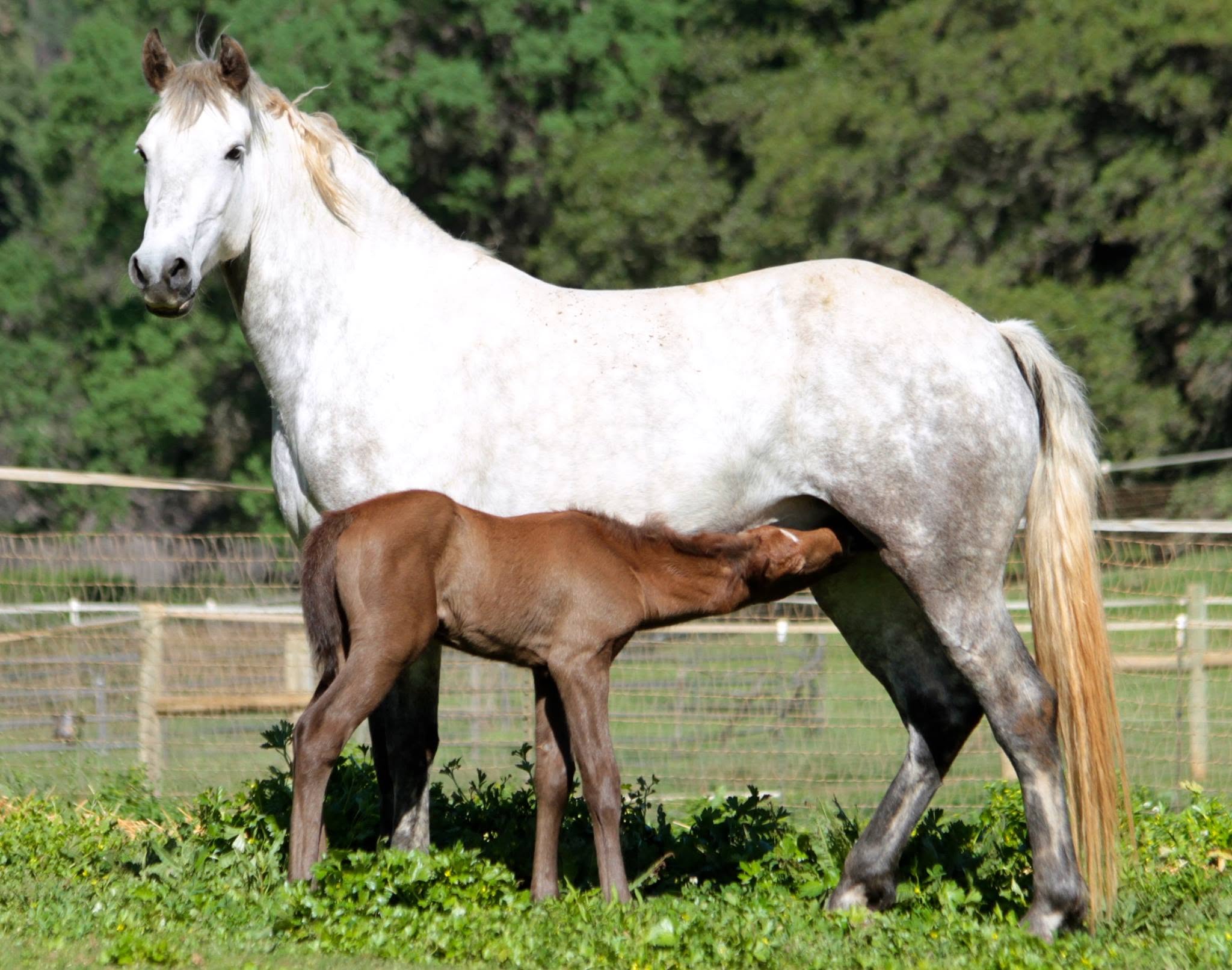
She provides the environment in which the next generation begins.
Her condition, nutritional status, and metabolic health are part of that environment, influencing development during the months before a foal ever stands beside her.
The science of maternal programming is still developing. There is much we do not yet understand, and no single study can tell us the future of an individual foal.
But the evidence gives breeders good reason to take maternal condition seriously.
For those of us devoted to preserving the Connemara’s hardiness, soundness, athletic ability, and longevity, that responsibility begins long before the covering date.
The quiet fire may be invisible.
Our attention to it need not be.
This article belongs to The Inflammation Series in the Connemara Breeder’s Library:
- The Quiet Fire: What a Mare’s Inflammation Means for Her Foal
- The Inflamed Easy Keeper: When Fat Becomes More Than Fat
- The Aging Easy Keeper: When a Pony Is Fat, Losing Muscle, and Still Not Thriving
- The Cresty Neck Conundrum: When Regional Fat Tells a Bigger Story
- The Invisible Inflammation: Can a Healthy-Looking Horse Be Inflamed?
- The Gut–Immune Connection: Where Digestion Meets Inflammation
- Measuring the Invisible: What Equine Bloodwork Can—And Cannot—Tell Us
- When Inflammation Becomes Chronic: Finding the Underlying Cause
References and further reading
Robles M, et al. (2018). Maternal obesity increases insulin resistance, low-grade inflammation and osteochondrosis lesions in foals and yearlings until 18 months of age. PLoS ONE, 13(1), e0190309. https://doi.org/10.1371/journal.pone.0190309
Meng C, et al. (2025). BCAA supplementation enhances milk fat synthesis in Yili mares and promotes foal growth through remodeling of intestinal amino acid metabolism. Frontiers in Microbiology, 16, 1699614. https://doi.org/10.3389/fmicb.2025.1699614
Sobral GG, et al. (2023). Effect of Supplementation with Saccharomyces cerevisiae and β-glucans to Mares During Late Gestation on Colostrum Quality and Passive Transfer of Immunity in Foals. Journal of Equine Veterinary Science, 121, 104168. https://doi.org/10.1016/j.jevs.2022.104168
Educational information only. This article discusses published research and general breeding-management principles. It does not replace individualized veterinary or nutritional advice.
Ballymoon Farm — Connemara Sport Horses & Ponies
The Breeder’s Library

Previous Post
Next Post






For more of our latest photos and inspiration, follow along on instagram at @instapony_.
© Redbud Ranch 2020 | Connemara Sport Horses and Ponies | photos by Lisa Martin |
terms & Condtions |
privacy Policy
Intentionally Bred with People in Mind
Browns Valley, CA
+ Show / Hide Comments
Share to: